Maintaining industrial pipelines can be challenging, especially when work needs to be completed without causing unnecessary disruption to an operating system. In oil and gas facilities, water networks, chemical plants, and other industrial environments, maintenance teams may need to create new connections or carry out pipeline modifications under specific operating conditions.
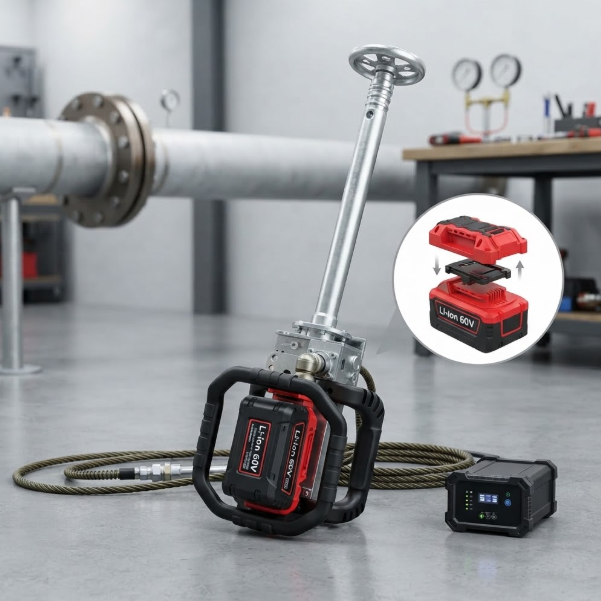
A Lithium Battery Pressure Drilling Machine offers an alternative for suitable field operations by combining battery-powered mobility with pressure pipeline drilling capabilities. Without relying on a continuously connected power cable, the equipment can be easier to position in outdoor locations, remote work areas, and industrial sites where access to electricity is limited.
For pipeline operators and maintenance contractors, choosing the right equipment involves more than convenience. Pipeline compatibility, operating pressure, safety procedures, battery performance, and technical support all need careful consideration.
What Makes a Lithium Battery Pressure Drilling Machine Different?
A lithium battery pressure drilling machine is designed for specialized drilling operations involving pressurized pipelines, when used with the appropriate pressure-rated equipment and procedures. Unlike a conventional machine that depends on a fixed electrical connection, a battery-powered model uses a rechargeable battery to operate.
This design can reduce dependence on power cables and give operators more flexibility when positioning the equipment. It may be particularly useful at outdoor pipeline locations, large industrial sites, or maintenance points where a nearby power outlet is unavailable.
However, battery power does not automatically make every drilling operation suitable for live pipelines. Whether drilling can be performed while a pipeline remains in service depends on the machine's rated capabilities, the complete pressure-drilling system, the pipeline conditions, and an approved operating procedure.
Why Mobility Matters in Field Maintenance
Pipeline maintenance rarely takes place under identical conditions. Some work areas are easy to access, while others may involve confined spaces, elevated pipework, or long distances between maintenance points.
A battery-powered pressure drilling machine can offer several practical benefits in these situations.
More flexible positioning: Without a continuously connected power cable, operators have greater freedom to position the equipment within the limits of the battery and operating setup.
Convenience at remote locations: Field teams may find battery-powered equipment useful when stable electrical power is difficult to access.
Less cable management: Fewer power cables around the machine can simplify equipment arrangement and reduce obstacles in the work area.
Easier movement between work locations: A suitable portable design can help maintenance teams transport and reposition equipment when servicing different pipeline sections.
These advantages can improve the practicality of field operations, although actual efficiency also depends on the machine's weight, battery runtime, drilling requirements, and site conditions.
Applications Across Industrial Pipeline Systems
A Lithium Battery Pressure Drilling Machine may be considered for a range of industrial pipeline maintenance tasks, subject to equipment specifications and the suitability of the complete system.
Potential application environments include:
- Oil and gas transmission and distribution pipelines
- Natural gas infrastructure
- Industrial and municipal water systems
- Chemical processing facilities
- Petrochemical plants
- Other industrial pipeline networks
In these environments, maintenance teams may need to prepare new connection points or modify existing pipeline arrangements. Where continued operation is required, the work must be planned carefully to avoid compromising pipeline integrity.
Before selecting equipment, buyers should identify the pipe diameter, pipe material, internal medium, operating pressure, temperature, and required drilling diameter. These factors help determine whether a particular pressure drilling machine is appropriate for the intended application.
Safety Considerations for Pressure Drilling
Drilling on a pressurized pipeline involves risks that are not present in ordinary workshop drilling. The equipment must be suitable for the pressure and operating conditions, and all related components must work together as a complete system.
Depending on the application, the setup may require compatible pressure-rated fittings, sealing components, valves, and other supporting equipment. Operators should also verify the installation, inspect the equipment, and follow the manufacturer's instructions and the site's approved work procedures.
Northen provides pressure pipeline equipment with safety-related functions such as overload protection and pressure monitoring, according to the supplied product information. These functions can support equipment monitoring, but they do not replace proper system design, pressure ratings, operator training, or established safety controls.
For buyers, it is important to confirm the machine's rated working pressure, compatible pipe sizes, applicable operating limits, and required supporting components before starting a project.
What Should Buyers Evaluate Before Purchasing?
Selecting a Lithium Battery Pressure Drilling Machine requires a clear understanding of the working environment and the demands of the intended operation.
1. Pipeline specifications
Confirm the pipe diameter, material, wall thickness, medium, operating pressure, and temperature. These details help establish whether the machine and its accessories are suitable for the pipeline.
2. Battery capacity and runtime
Battery performance matters when work takes place far from a charging point. Buyers should check the expected operating time, charging duration, battery replacement options, and whether additional batteries are available for longer jobs.
3. Equipment size and handling
Consider the machine's dimensions, weight, mounting arrangement, and available working space. Equipment that can be positioned appropriately is especially important in restricted or difficult-to-access locations.
4. Safety features and system compatibility
Review overload protection, pressure-monitoring functions, and the compatibility of pressure-rated accessories. Confirm that the complete setup meets the requirements of the intended operation rather than evaluating the drilling machine alone.
5. Maintenance and technical support
Long-term usability also depends on service availability, replacement parts, operating guidance, and maintenance requirements. Access to technical support can be particularly valuable when equipment is used across multiple job sites.
Considering Northen for Pipeline Drilling Equipment
Northen supplies equipment for specialized pipeline applications, including the Lithium Battery Pressure Drilling Machine. Its battery-powered design is intended to provide greater positioning flexibility for suitable field operations, while its pressure-drilling application addresses the needs of industrial pipeline maintenance.
For pipeline contractors, operators, and industrial equipment purchasers, the key is to match the machine to the actual working conditions. Before placing an order, buyers should confirm the product specifications, applicable pressure limits, battery performance, included accessories, and technical support arrangements.
More product details are available on the Northen Lithium Battery Pressure Drilling Machine page. Buyers can also learn more about the supplier through the Northen company profile.
Conclusion
Pipeline maintenance often takes place in demanding environments where equipment mobility and reliable operation are important. A Lithium Battery Pressure Drilling Machine can offer greater flexibility than equipment that depends on a fixed power connection, making it worth considering for suitable industrial field applications.
The right choice should be based on pipeline specifications, battery performance, equipment compatibility, safety requirements, and after-sales support. Most importantly, work on pressurized pipelines must only be performed with an appropriately rated system and an approved procedure.
By evaluating these factors before purchasing, maintenance teams can make a more informed equipment decision and better prepare for the practical challenges of pipeline work.