In industrial operations, chemical treatment is effective only when the correct amount of chemical reaches the process at the required pressure and time. Whether the goal is to prevent corrosion, control scale formation, or maintain water quality, inconsistent dosing can increase operating costs and compromise process performance.
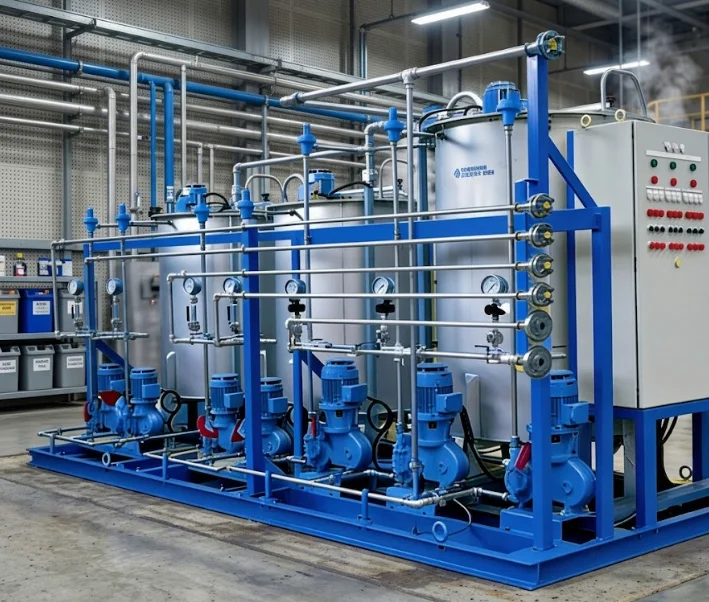
A properly designed chemical injection skid helps address these challenges by bringing metering equipment, pressure-control components, filtration, calibration devices, and instrumentation together in one integrated package. Rather than selecting a pump in isolation, engineers can evaluate the complete dosing system against the actual operating conditions.
For industries such as oil and gas, water treatment, power generation, and chemical processing, this system-level approach can improve dosing consistency and simplify equipment operation.
1. Why Accurate Chemical Dosing Matters
Industrial chemicals often perform specific functions at carefully controlled concentrations. Corrosion inhibitors protect equipment and pipelines, scale inhibitors help control mineral deposits, and demulsifiers support the separation of oil and water. Other applications may require biocides, antifoaming agents, or water-treatment chemicals.
Insufficient dosing may reduce treatment effectiveness, while excessive injection can waste chemicals, increase operating expenses, or interfere with downstream processes.
A reliable chemical dosing system must therefore deliver the required flow rate under actual process conditions. Engineers need to consider normal and maximum operating pressure, chemical viscosity, temperature, required flow range, and dosing frequency.
Selecting a metering pump solely by its maximum rated capacity can lead to poor results. The pump must operate within a suitable range while maintaining the performance required by the application.
2. How Supporting Components Improve System Performance
A chemical injection skid is more than a metering pump mounted on a frame. Its supporting components help control pressure, verify output, protect equipment, and improve operational reliability.
A typical configuration may include:
- Metering pump: Delivers a controlled quantity of chemical into the process.
- Back-pressure valve: Helps maintain the required pressure conditions in the dosing line.
- Safety or pressure-relief valve: Provides pressure protection when correctly selected and installed.
- Pulsation dampener: Reduces flow and pressure fluctuations associated with reciprocating pumps.
- Calibration cylinder: Allows operators to check actual pump delivery against the required setting.
- Y-filter: Helps remove particles that could interfere with valves or other components.
- Control cabinet and instrumentation: Support monitoring, adjustment, and automation according to the system design.
These components must be selected and arranged to work together. For example, a pulsation dampener may help stabilize a reciprocating pump's discharge, but its effectiveness depends on the pump characteristics and system configuration. Similarly, a filter must provide suitable filtration without creating excessive pressure loss or introducing an unacceptable blockage risk.
3. Chemical Compatibility Should Guide Material Selection
The chemical being injected is one of the first things engineers should identify when specifying a chemical injection skid. Different fluids can have very different effects on metals, elastomers, seals, and plastic components.
Important considerations include chemical concentration, operating temperature, viscosity, corrosiveness, and compatibility with the materials that contact the fluid.
These factors influence the selection of the pump head, diaphragm, seals, valves, tubing, and piping. A material that performs well with one treatment chemical may deteriorate when exposed to another, even if both are used in similar industrial processes.
Incompatible materials can lead to leakage, premature component failure, inaccurate dosing, and unplanned maintenance. For this reason, material selection should be based on verified chemical compatibility data and the actual operating environment rather than general assumptions.
4. Matching Injection Pressure to Process Conditions
Pressure requirements are another major factor in system design. The metering pump must generate sufficient discharge pressure to overcome the process pressure at the injection point, along with pressure losses through the piping, valves, and other components.
A system designed for low-pressure water treatment may therefore differ substantially from a high-pressure oilfield chemical injection skid. Pump selection, valve ratings, piping specifications, and pressure-protection arrangements must all reflect the intended duty.
Flowell provides metering pump solutions and works with pump brands including Milton Roy, ProMinent, and Pulsafeeder. The appropriate equipment depends on the required flow rate, pressure, chemical properties, and control requirements.
Engineers should also consider operating flexibility. If process pressure or chemical demand changes frequently, the system may need a suitable adjustment range, pressure monitoring, and control signals to maintain the required dosing rate.
5. Where Chemical Injection Skids Are Used
Oil and gas production
Oilfield chemical injection systems may deliver corrosion inhibitors, scale inhibitors, demulsifiers, and other treatment chemicals. Reliable dosing helps support flow assurance, equipment protection, and production operations. System design must account for operating pressure, environmental conditions, chemical compatibility, and access for maintenance.
Water and wastewater treatment
Chemical dosing is used in processes such as disinfection, pH adjustment, and other treatment stages. Since water quality and flow rates can vary, the dosing package should provide an appropriate operating range and allow operators to verify delivery.
Power generation
Power plants use chemical treatment to help manage process-water conditions and protect equipment. The dosing system must match the treatment requirements and operate consistently within the specified process limits.
Chemical and general industrial processing
Manufacturing facilities may inject additives, inhibitors, catalysts, or other process chemicals. In these applications, the skid layout, instrumentation, and control method should reflect the process design and operating procedures.
Across these sectors, the same principle applies: the equipment must be configured for the application rather than selected as a generic package.
6. A Practical Checklist Before Purchasing
Before requesting a quotation for a chemical injection skid, prepare the information needed to define the operating requirements:
- Chemical details: Name, concentration, viscosity, temperature, and material compatibility requirements.
- Flow requirements: Normal, minimum, and maximum dosing rates.
- Pressure conditions: Injection-point pressure, required discharge pressure, and expected variations.
- Operating mode: Continuous or intermittent injection, including any dosing frequency requirements.
- Control requirements: Manual adjustment, local instrumentation, or integration with an automated control system.
- Installation conditions: Available space, utility connections, environmental conditions, and maintenance access.
- Safety requirements: Applicable pressure ratings, containment needs, and site-specific protection measures.
Providing these details helps the supplier select suitable pumps, valves, instrumentation, and skid arrangements while reducing the risk of costly changes later.
7. Flowell's Approach to Integrated Dosing Systems
Flowell (Shanghai) Industrial Co., Ltd. supplies metering pumps, centrifugal pumps, chemical dosing skids, valves, and related accessories. Its chemical injection skid production is supported by a dedicated skid factory in Zibo, Shandong Province.
By integrating key dosing components into one package, Flowell can help customers evaluate pump performance, pressure control, filtration, calibration, instrumentation, and installation space as parts of the same system.
For projects with specific operating conditions, buyers should provide process data and technical requirements so that the proposed configuration can be assessed against the intended application.
Conclusion
A dependable chemical injection skid combines accurate metering with appropriate pressure control, compatible materials, effective calibration, filtration, and suitable safety measures. Its performance depends on how well these elements work together under real operating conditions.
For oil and gas facilities, water treatment plants, power stations, and chemical manufacturers, selecting an integrated dosing package based on verified process requirements can help improve reliability and control operating costs. Flowell (Shanghai) Industrial offers equipment and system solutions for businesses seeking a chemical injection skid tailored to their application.
https://www.flowellgroup.com/how-modern-chemical-injection-skids-improve-industrial-reliability.html