In modern advanced manufacturing, the gap between average output and high-performance production is often not defined by the machine itself—but by the fixture system supporting it. A well-engineered fixture ensures stability, repeatability, and dimensional consistency, especially in high-volume and high-precision machining environments.
As industries continue to push toward tighter tolerances and faster cycle times, custom fixture machining has become a critical enabler of productivity and quality control.
What Is Custom Fixture Machining?
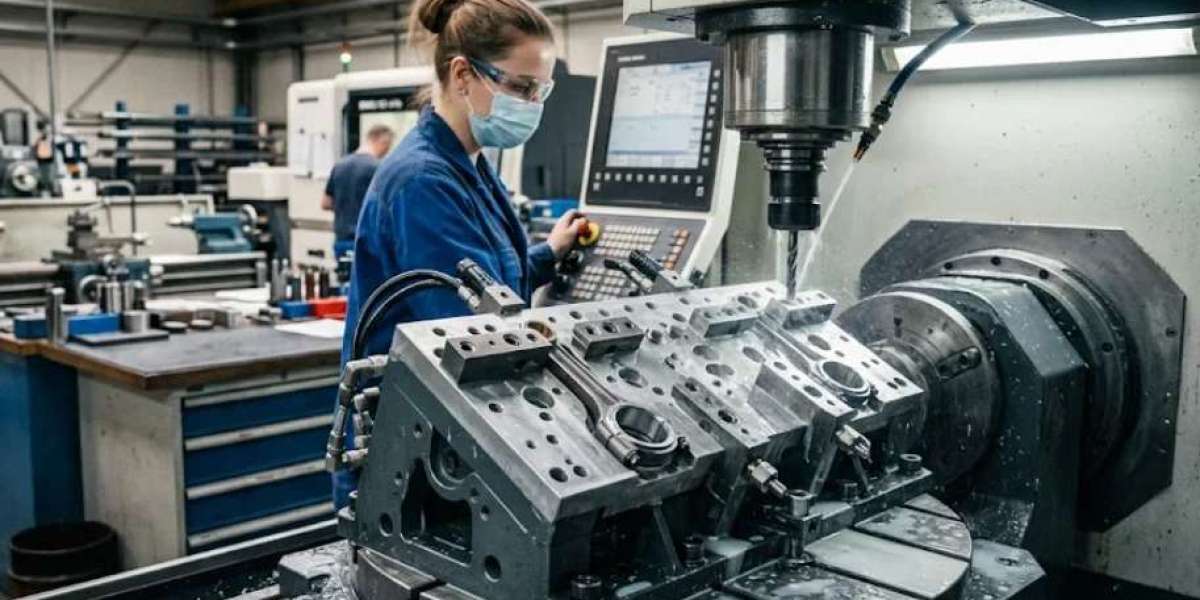
Custom fixture machining refers to the design and production of specialized workholding systems used to secure and position a workpiece during machining, inspection, or assembly processes.
Unlike standard off-the-shelf fixtures, custom solutions are developed based on specific engineering requirements, including:
- Workpiece geometry and complexity
- Machining process (CNC milling, turning, drilling, etc.)
- Dimensional tolerance requirements
- Production volume and cycle time targets
The goal is to ensure accurate positioning, vibration control, and repeatable performance across all production cycles.
Core Engineering Principles of High-Performance Fixtures
1. Workpiece Stability and Clamping Control
A high-quality fixture must securely hold the component without causing deformation. Key requirements include:
- Balanced clamping force distribution
- Resistance to machining vibration
- Structural rigidity under load
Poor fixture design can directly result in dimensional deviation and surface quality issues.
2. Repeatability and Precision Consistency
One of the most important functions of a fixture is ensuring that every part is positioned identically during each machining cycle. This enables:
- Stable batch-to-batch consistency
- Tight tolerance control in mass production
- Reduced setup variation between operations
This is particularly critical in industries such as automotive, aerospace, and precision electronics manufacturing.
3. Tool Accessibility and Machining Efficiency
A well-designed fixture must also support efficient machining operations by providing:
- Clear tool access paths
- Multi-axis machining compatibility
- Reduced need for repositioning
This helps shorten cycle time and improve overall production throughput.
Common Types of Custom Machining Fixtures
CNC Milling Fixtures
Designed to support complex part geometries during milling operations, ensuring rigidity and stability under cutting forces.
Turning Fixtures
Used in lathe operations to maintain concentricity, balance, and rotational accuracy.
Drilling and Tapping Fixtures
Provide precise hole alignment and consistent positioning for repetitive drilling tasks.
Assembly Fixtures
Used in final assembly and inspection stages to ensure accurate alignment of multiple components.
Material Selection in Fixture Design
The performance and lifespan of a fixture depend heavily on material selection. Common materials include:
- Tool Steel: High strength and excellent wear resistance
- Aluminum Alloys: Lightweight and corrosion-resistant, suitable for flexible applications
- Hardened Steel: Ideal for high-volume, heavy-duty production
- Engineering Plastics: Used for delicate or non-metallic components
Companies like AICHI TECHNOLOGY select materials based on application requirements to ensure long-term stability and performance.
Key Benefits of Custom Fixture Machining
1. Higher Production Efficiency
Custom fixtures significantly reduce setup time and improve machining cycle speed.
2. Improved Product Quality
Stable and precise positioning ensures consistent dimensional accuracy across production batches.
3. Lower Labor Dependency
Automation-compatible fixture designs reduce manual intervention and operator workload.
4. Enhanced Operational Safety
Secure workholding minimizes risks associated with part movement during machining.
Industry Applications
Automotive Manufacturing
Used for engine components, transmission systems, and structural assemblies where repeatability is critical.
Aerospace Industry
Supports machining of complex, high-tolerance parts requiring extreme precision.
Electronics and Semiconductor Manufacturing
Enables micro-scale machining and delicate component handling.
Medical Device Production
Ensures strict compliance with precision and cleanliness requirements.
Why Work with AICHI TECHNOLOGY?
AICHI TECHNOLOGY specializes in custom fixture machining solutions designed for modern industrial demands. The company provides:
- Advanced CNC machining capabilities
- Precision engineering and design expertise
- Custom solutions for complex and high-volume applications
- Strict quality inspection and control systems
Their focus is on delivering fixtures that enhance accuracy, durability, and production efficiency across different manufacturing sectors.
Conclusion
Custom fixture machining plays a foundational role in modern manufacturing systems. While machines execute the process, it is the fixture that defines precision, stability, and repeatability.
By investing in engineered fixture solutions, manufacturers can significantly improve productivity, reduce operational errors, and maintain consistent product quality.
With expertise from providers like AICHI TECHNOLOGY, companies can implement advanced workholding systems that meet the increasing demands of high-precision, high-efficiency industrial production.
https://www.wxaichi.com/from-concept-to-clamping-the-power-of-custom-fixtures-in-cnc-machining.html