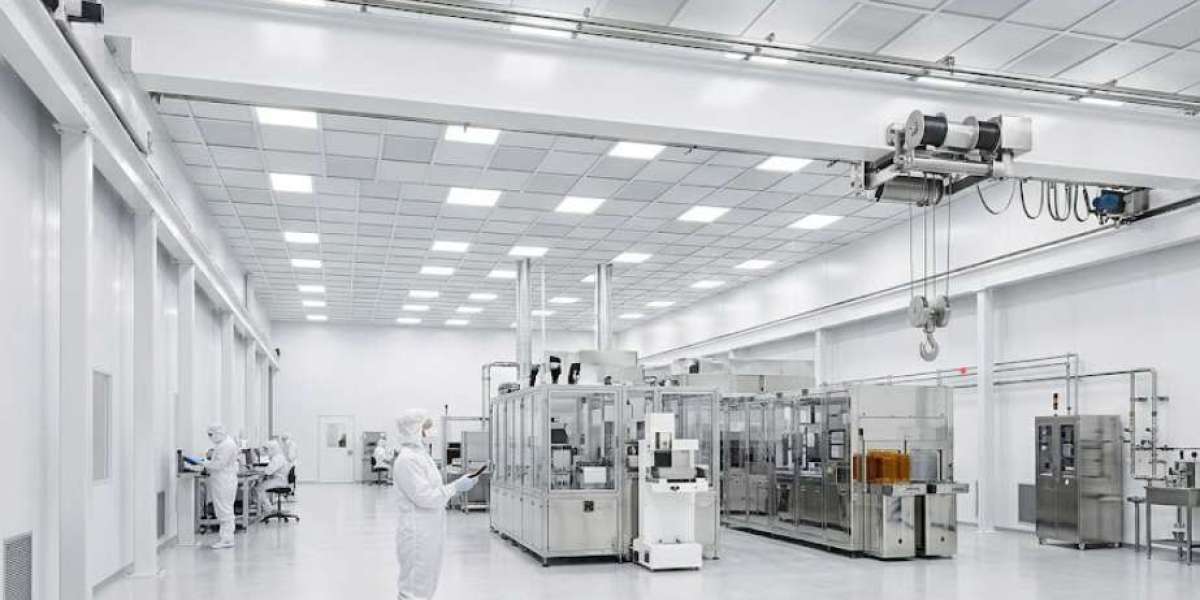
Industries such as semiconductors, pharmaceuticals, aerospace, and precision electronics operate under extremely strict environmental requirements. In these sectors, even microscopic particles can cause product defects, production losses, or regulatory non-compliance.
As a result, traditional overhead lifting systems are no longer sufficient. This has led to increasing demand for Cleanroom EOT (Electric Overhead Traveling) cranes, designed specifically for contamination-sensitive environments.
What Is a Cleanroom EOT Crane?
A Cleanroom EOT crane is a specially engineered overhead lifting system designed to operate inside controlled environments while minimizing contamination risks.
Unlike standard cranes, cleanroom models are designed to reduce:
- Airborne particle generation
- Airflow disturbance
- Surface contamination
These systems typically meet ISO Class 5–8 cleanroom requirements, making them suitable for high-precision manufacturing environments where cleanliness is critical.
Key Engineering Requirements for Cleanroom Cranes
1. Low Particle Emission Design
Cleanroom cranes are engineered to minimize contamination at the source. This is achieved through:
- Fully enclosed drive systems
- Anti-static surface treatments
- Low-shedding construction materials
These design choices help ensure compliance with strict particulate control standards.
2. Smooth Motion and Precision Control
Precision handling is essential in cleanroom environments. Modern systems use advanced control technologies such as:
- Variable Frequency Drives (VFD)
- Micro-speed positioning systems
- Low-vibration motion control
These features allow safe and precise movement of sensitive materials like semiconductor wafers and medical components.
3. Corrosion and Chemical Resistance
In pharmaceutical and biotech environments, cleaning agents and disinfectants are frequently used. Therefore, cleanroom cranes must resist:
- Chemical exposure
- High humidity conditions
- Frequent sterilization processes
Materials such as stainless steel and specialized protective coatings are commonly applied.
Structural Design Features
Sealed Mechanical Systems
Critical mechanical components are fully sealed to prevent:
- Lubricant leakage
- Particle release
- External contamination ingress
Enclosed Hoisting Mechanism
The hoisting system is designed to operate within a protective enclosure, reducing exposure to cleanroom air while maintaining performance stability.
Cleanroom-Compatible Cabling
Special low-outgassing cables are used to ensure that no harmful particles are released into controlled environments.
Modular Maintenance Design
Modern cleanroom cranes are designed for easier maintenance, allowing servicing without compromising cleanroom integrity.
Industrial Applications
Semiconductor Manufacturing
Used for wafer handling and precision equipment transfer in ultra-clean environments where contamination control is critical.
Pharmaceutical Industry
Supports sterile production processes and safe handling of sensitive compounds and materials.
Aerospace and Precision Engineering
Assists in the assembly and movement of high-value, high-precision components.
Electronics Manufacturing
Ensures dust-free handling in production lines for microelectronics and sensitive assemblies.
Benefits of Working with a Cleanroom EOT Crane Factory
Choosing a specialized manufacturer is essential for performance and compliance.
Custom Engineering Solutions
Factories can design systems based on:
- Load capacity requirements
- Span and lifting height
- Cleanroom classification levels
Compliance with International Standards
Reliable manufacturers ensure compliance with:
- ISO 14644 cleanroom standards
- CE safety certifications
- Industry-specific regulatory requirements
Improved Operational Efficiency
Cleanroom cranes help reduce:
- Product contamination risks
- Unplanned downtime
- Equipment-related production interruptions
Long-Term Cost Efficiency
High-quality systems reduce maintenance frequency and extend operational lifespan, improving overall return on investment.
Why Goldcrane?
Goldcrane is a specialized cleanroom EOT crane factory focused on delivering precision-engineered lifting systems for contamination-sensitive industries.
The company provides:
- Custom-designed cleanroom crane systems
- Advanced manufacturing and testing capabilities
- Strict quality control procedures
- Global project experience across high-tech sectors
With a strong focus on precision, cleanliness, and reliability, Goldcrane supports manufacturers operating in highly regulated and technically demanding environments.
Conclusion
As global industries continue to move toward higher precision manufacturing and stricter environmental control, the role of cleanroom EOT crane factories is becoming increasingly important.
These specialized lifting systems are not just material handling equipment—they are essential components in maintaining product integrity, operational efficiency, and regulatory compliance.
By working with experienced manufacturers like Goldcrane, companies can implement reliable cleanroom lifting solutions that meet the evolving demands of modern high-tech production environments.