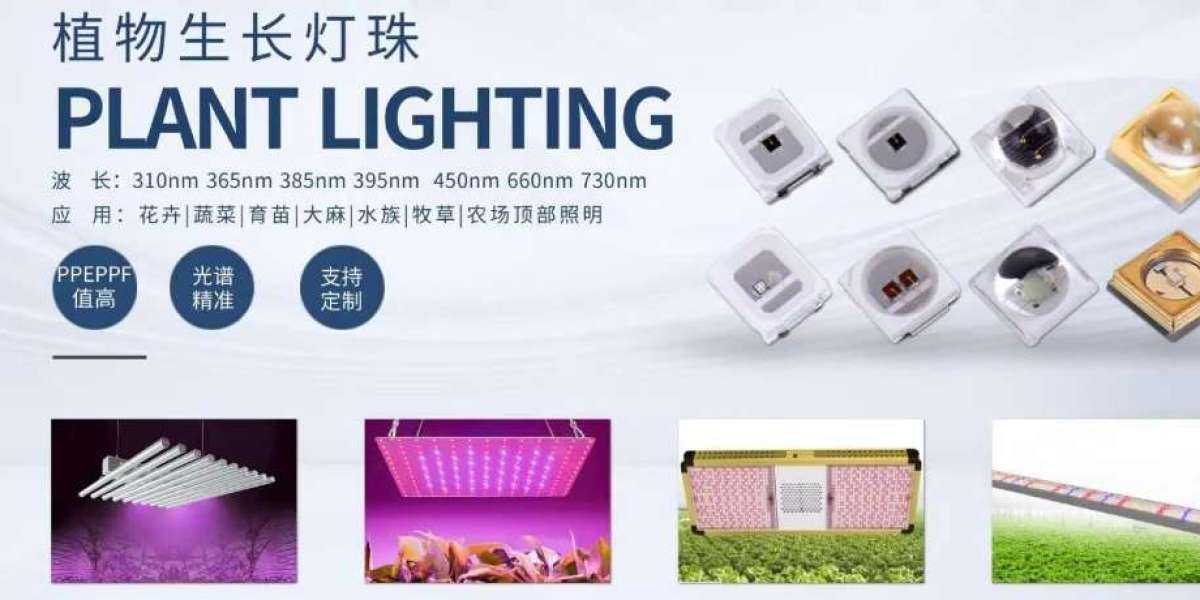
Scientific research has shown that plant lights play a key role in regulating light quality during plant photosynthesis. Today, their application has expanded to even more fields. From food production, fruit and vegetable cultivation, and floriculture to medicinal plant cultivation and insect repellents, industrial applications using plant lights as their core technology are becoming increasingly popular. The cross -sector integration of "lighting + agriculture" has spawned a massive emerging market. As market demand continues to soar, not only are governments and major research institutions focusing on the plant lighting technology industry, but manufacturers and technology-based companies across various sectors are also increasing their investment in the industry. Investment and financing efforts in various segments are increasing, and the industry has officially entered a period of accelerated development.
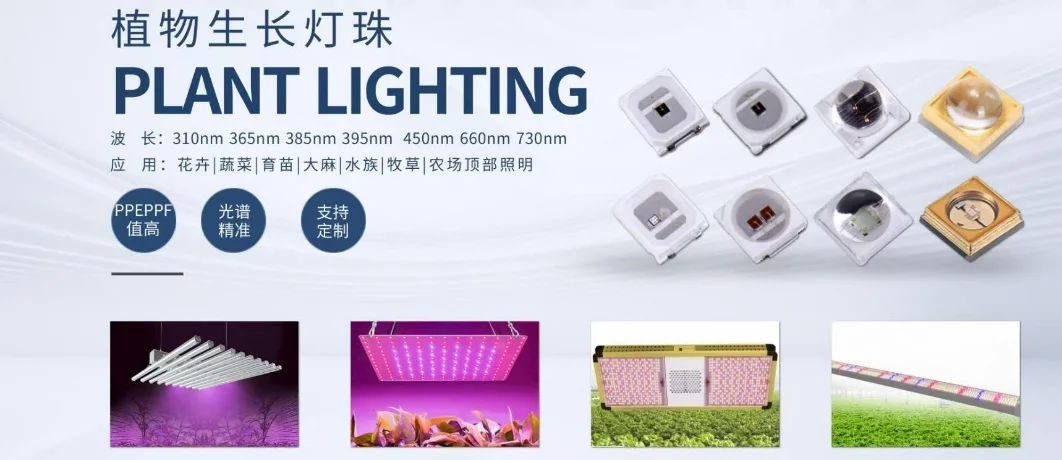
Plant lighting can be precisely controlled and is energy-saving and environmentally friendly
Fundamentally, the extended application of horticultural lighting in fields like agriculture is an innovative extension of photosynthesis. Of the seven colors of light, plants primarily absorb red and blue light for photosynthesis, while trace amounts of remaining light, such as green, yellow, and orange, are primarily used for other metabolic processes. Precisely because of this variability in light quality , horticultural lighting can achieve efficient plant cultivation through precise control of illuminance, photoperiod, spectral distribution, and light uniformity, further enhancing the efficient use of effective light sources.
only
optimizes plant growth and development but also targets the specific spectra required by different plants at different growth stages, eliminating ineffective light and precisely controlling the wavelengths necessary for plant growth to improve photosynthesis efficiency, ultimately guaranteeing plant yield and quality. Furthermore, horticultural lighting offers significant advantages, such as energy conservation and environmental protection, making it a viable solution for developing high-quality agriculture.
From a product perspective, there are four main types of plant lighting: LED, fluorescent, high-pressure sodium, incandescent, and halogen. LEDs are currently the mainstream product in the market. Based on semiconductor light sources and intelligent control equipment, LED plant lighting can create the optimal light environment for plant growth based on plant growth requirements and production goals, truly achieving high-quality, high-yield, stable, efficient, ecological, and safe agricultural production. Due to their high light efficiency, low heat generation, compact size, and long lifespan, coupled with continuous technological advancements, LED plant lighting's market penetration continues to increase.
Over the past decade, the industry has steadily accelerated. In addition to further consolidating its market position in traditional agriculture, it has also achieved breakthroughs in a variety of fields, including protected horticulture, livestock and poultry farming, and fishery plant protection. According to data from GGII (Gaogong Industry Research Institute), 2018-2020 was a period of rapid growth in the output value of China's LED horticultural lighting systems. In 2020, the output value of China's LED horticultural lighting systems reached 9.5 billion yuan, a year-on-year increase of 25%. Over the past two years, the industry has maintained a high growth rate of over 20%, and the market size has already exceeded 11 billion yuan.
Driven by a series of favorable national policies, a growing number of leading domestic companies are increasing their market presence in the horticultural lighting market. The industry chain, spanning upstream chips, packaging components, lighting fixtures, and systems, has essentially taken shape. Industry authorities predict that demand for LED horticultural lighting products and systems in China will reach 149,000 units this year.
Plant lighting is a key solution to promote high-quality agricultural development
From an industrial application perspective, horticultural lighting is widely used in a variety of plant-related fields. In addition to traditional applications such as plant tissue culture, leafy vegetable production, greenhouse lighting, and flower cultivation, the increasing cross-border integration of "lighting + agriculture" in recent years has led to horticultural lighting being widely used in algae cultivation, plant protection, space-grown fruits and vegetables, and mosquito repellent, creating an inestimable market prospect.
As the global food crisis becomes increasingly prominent, horticultural lighting has become a crucial component in ensuring food security. Traditional agriculture is impacted by factors such as climate, soil pollution, and other factors, severely threatening crop yield and quality. The combination of horticultural lighting control technology and a range of intelligent agricultural technologies can ensure a safe and stable growing environment for plants, playing a crucial role in ensuring continuous, intensive, and efficient production of high-quality, pollution-free crops year-round.
At the policy level, as the industry continues to expand, standardization efforts in the horticultural lighting industry are also progressing. As early as 2019, China established a horticultural lighting advisory group. IEC standard planning related to horticultural lighting is progressing at full speed under the leadership of the National Electric Light Source Quality Supervision and Inspection Center. This is of great significance to the sustainable development of the horticultural lighting industry. As horticultural lighting provides the technological foundation for large-scale food production in future plant factories, China also views it as a key industry leading the future agricultural revolution, and a growing number of supporting policies are being released.
On the market side, in addition to core technology, cost factors cannot be ignored as a factor restricting the development of the plant lighting industry. In recent years, as the industry has become more mature, the cost reduction and efficiency improvement results of related products have become increasingly significant. Data shows that in 2022, the average price of LED plant lighting systems was 80,200 yuan/set, and the average price of LED plant lighting fixtures was 6,500 yuan/set. By this year, the average prices have dropped to 70,000 yuan/set and 6,300 yuan/set, respectively, which has brought new impetus to further increase market penetration. Relevant institutions predict that by 2024, the size of the plant lighting equipment market alone is expected to reach US$5.7 billion.