Power transmission construction involves a wide range of lifting tasks, including raising transmission towers, handling structural components, and positioning heavy electrical equipment. Selecting suitable lifting accessories is essential for keeping these operations organized and ensuring that wire ropes, pulleys, and connecting components work together as intended.
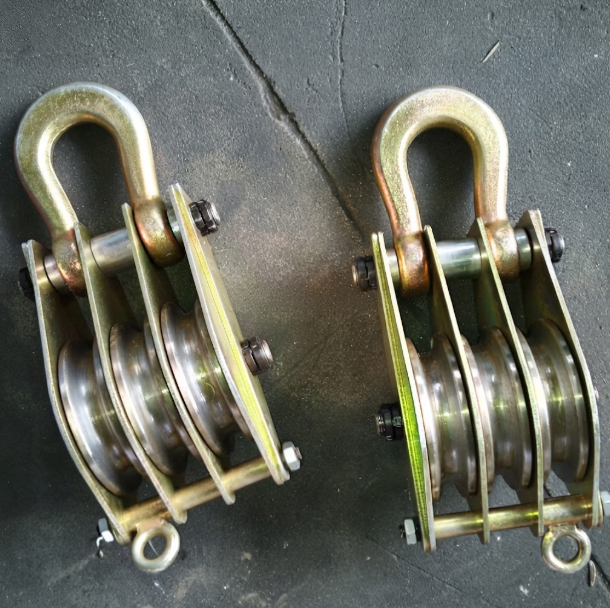
A Heavy Duty Hoisting Tackle 10-200KN Casting Steel Sheave for Lifting is designed for demanding lifting and rigging applications. For contractors, construction teams, and industrial equipment buyers, choosing the right model requires careful consideration of load ratings, wire rope specifications, sheave arrangements, and site conditions.
Rather than comparing products by rated capacity alone, buyers should evaluate how the equipment will perform within the complete lifting system.
1. Understanding the Role of Heavy-Duty Hoisting Tackle
Hoisting tackle is commonly used to guide wire ropes and support different lifting configurations. Depending on the arrangement, a pulley block can also provide mechanical advantage, allowing a load to be lifted with less input force. The actual lifting effort will depend on factors such as the number of supporting rope sections, friction, and the overall rigging arrangement.
These products are widely used in applications such as:
- Transmission tower installation and overhead power line construction
- Handling crossarms and other electrical infrastructure components
- Industrial equipment installation and maintenance
- Heavy-duty wire rope lifting and rigging operations
Each application presents different requirements. Before selecting a hoisting tackle, project teams should determine the expected load, lifting height, rope routing, available installation space, and environmental conditions.
The tackle must also work with the winch or crane, wire rope, connectors, and supporting structure. Considering the entire system helps prevent compatibility problems during installation and operation.
2. Why Casting Steel Sheaves Deserve Attention
The sheave is one of the main working components of a hoisting tackle. Its groove guides the wire rope as the load moves, so its dimensions, surface condition, and compatibility with the rope can affect equipment performance.
When evaluating a casting steel sheave for lifting, buyers should focus on several factors.
Wire rope compatibility
The sheave groove must be suitable for the specified wire rope diameter and type. An unsuitable groove can affect rope tracking and contribute to premature wear. Buyers should verify the manufacturer's compatibility specifications before placing an order.
Structural integrity
The sheave, frame, bearings, and attachment points all need to withstand the forces associated with the intended application. Regular inspections should look for cracks, deformation, corrosion, and excessive wear. Any damaged component should be assessed according to the manufacturer's procedures and applicable safety requirements.
Maintenance and service conditions
Outdoor power line construction may expose lifting equipment to moisture, dust, changing temperatures, and other challenging conditions. Appropriate inspection, cleaning, lubrication where specified, and maintenance can help identify problems before they affect operations.
Although material selection matters, the overall reliability of a hoisting tackle also depends on its design, manufacturing quality, correct installation, and ongoing maintenance.
3. Selecting the Appropriate Load Rating
Donghuan Power Technology offers a heavy-duty hoisting tackle range with published rated-load options from 10KN to 200KN. Selecting a suitable model requires matching its rating and configuration to the actual lifting plan.
Before purchasing, confirm the following information:
- Rated load and the manufacturer's rating basis
- Compatible wire rope diameter and type
- Number and arrangement of sheaves
- Hook, ring, plate, or other attachment configuration
- Compatibility with the lifting equipment and supporting structure
It is also important to understand the units used in the specifications. Kilonewtons (kN) measure force, not mass. Therefore, a rated load expressed in kN should not be interpreted directly as a load capacity in tonnes without checking the manufacturer's documentation and rating conditions.
The complete lifting arrangement must remain within the permitted limits of every component. Selecting a tackle with an appropriate rating does not compensate for an undersized rope, unsuitable connector, or inadequate anchor point.
4. Choosing Between Single-Sheave and Multi-Sheave Configurations
Sheave configuration influences how a wire rope travels through the tackle and how a lifting system is arranged.
A single-sheave block may be appropriate for relatively straightforward rope-guiding applications. Multi-sheave tackle can accommodate more complex reeving arrangements and may provide mechanical advantage when configured correctly.
However, additional sheaves can increase rope requirements, friction, equipment complexity, and the space needed for installation. The most suitable option depends on the required lifting force, load movement, available clearance, and lifting height.
Donghuan Power Technology provides different sheave and hanger configurations, including hook, ring, and plate options. Because configurations and specifications may vary by model, buyers should confirm the exact arrangement available for their intended application.
5. A Practical Checklist for Equipment Buyers
Procurement teams can reduce the risk of selecting unsuitable lifting equipment by reviewing several points before ordering.
First, define the lifting task and establish the maximum expected load. Next, confirm the rope specifications, required sheave arrangement, and attachment method. These details provide a practical basis for comparing different models.
Buyers should also request technical documentation and any relevant conformity records, check the manufacturer's inspection and maintenance recommendations, and clarify the availability of replacement components.
Finally, verify that the selected tackle is appropriate for the complete rigging system and that the planned operation follows applicable lifting and workplace safety requirements. Equipment should be used only within its specified limits and inspected by competent personnel as required.
6. Sourcing Heavy-Duty Hoisting Tackle from Donghuan Power Technology
Donghuan Power Technology supplies hoisting tackle for power transmission construction and industrial lifting applications. Its published product range includes 10–200KN rated-load options, multiple sheave configurations, and different hanger styles.
For buyers searching for a heavy duty hoisting tackle manufacturer, providing clear technical requirements can make product selection more efficient. Useful details include the intended application, required load rating, wire rope diameter, preferred attachment style, and operating environment.
Reviewing these requirements against the specifications of the Heavy Duty Hoisting Tackle 10-200KN Casting Steel Sheave for Lifting can help determine whether the product is suitable for a particular project.
Conclusion
Choosing heavy-duty hoisting tackle involves more than selecting a load rating. Wire rope compatibility, casting steel sheave design, tackle configuration, maintenance requirements, and integration with the complete lifting system all deserve attention.
For power transmission contractors and industrial buyers, checking these factors before purchasing can help reduce equipment mismatches and support more reliable lifting operations. Donghuan Power Technology's hoisting tackle range provides several load and configuration options for buyers to evaluate against their project requirements.