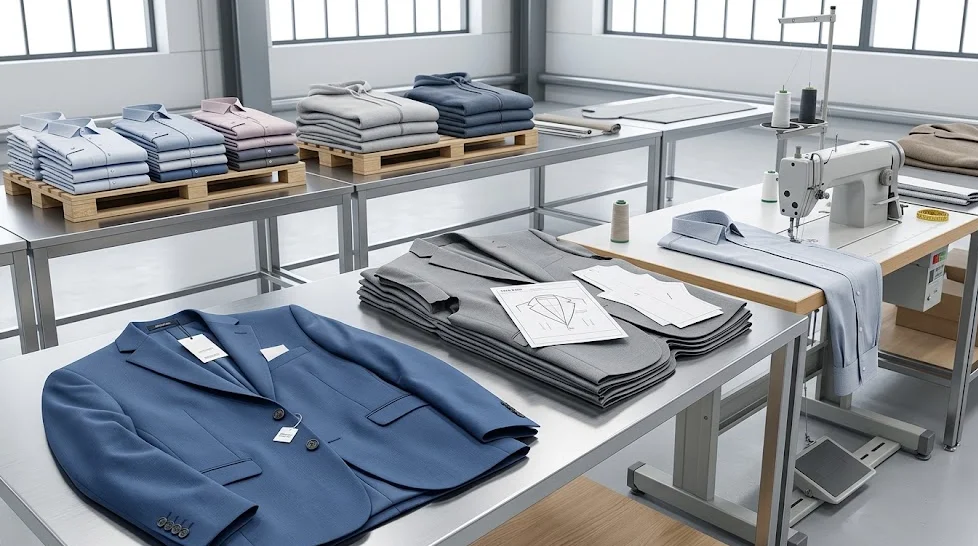
Producing quality men's apparel requires more than choosing a fabric and assembling garment pieces. Fashion brands, clothing retailers, and wholesalers need a well-organized production process to ensure consistent sizing, reliable workmanship, and timely delivery. Understanding the men's clothing manufacturing process can help buyers communicate their expectations more clearly and make better decisions when working with an apparel manufacturer.
Whether the collection includes formal shirts, tailored blazers, casual hoodies, or winter coats, each stage of manufacturing contributes to the garment's final appearance, comfort, and durability.
1. Turning Design Ideas into Production Requirements
Every garment begins with a clear design concept. Before manufacturing starts, buyers need to establish the style, target fit, available sizes, color options, fabric preferences, and branding details.
A technical specification sheet, commonly known as a tech pack, helps translate these ideas into instructions that a factory can follow. It may include garment measurements, stitching requirements, construction details, label placement, trims, and packaging instructions.
Different clothing categories require different design considerations. For example, tailored blazers depend on balanced proportions and structured shoulders, while casual trousers require appropriate waist and leg measurements. Clear specifications reduce misunderstandings and make it easier to maintain consistency across repeat orders.
2. Selecting Fabrics and Approving Samples
Fabric selection affects not only how a garment looks but also how it feels, performs, and holds its shape. Lightweight and breathable materials may be suitable for business shirts, while coats and blazers often require fabrics that provide sufficient structure. Hoodies generally place greater emphasis on comfort, fabric weight, and shape retention after repeated washing.
Once the materials and specifications are agreed upon, the manufacturer develops patterns and prepares samples for evaluation.
Buyers should review the sample carefully, checking measurements, fit, stitching, fabric appearance, and finishing details. If adjustments are needed, they should be recorded and confirmed before bulk production begins. Approving a representative sample provides a useful reference for subsequent manufacturing and quality inspections.
3. Pattern Making, Grading, and Fabric Cutting
After sample approval, patterns are prepared for the required size range. Pattern grading adjusts the original pattern to create different sizes while maintaining the intended proportions and fit.
Fabric cutting follows the approved patterns and production plan. Accurate cutting helps ensure that garment components fit together correctly during assembly. For striped or checked materials, pattern alignment also requires attention to reduce visible inconsistencies.
Factories typically organize cut pieces by style, size, color, and production batch. This makes it easier to track components and reduces the risk of mixing different orders during the manufacturing process.
4. Sewing and Garment Construction
Sewing is the stage where individual components become complete garments. The operations vary according to the design and construction requirements.
For blazers, the process may involve assembling the front panels, attaching sleeves, constructing lapels, and fitting the lining. Shirt production includes collar and cuff assembly, while trousers require careful work on pockets, waistbands, closures, and hems.
Consistent seam allowances, secure stitching, and accurate component placement are important for both appearance and durability. In-process inspections can identify problems such as uneven seams, skipped stitches, or measurement deviations before they affect a large production batch.
5. Finishing, Inspection, and Packaging
Once assembly is complete, garments move to finishing operations. These may include trimming loose threads, pressing, attaching final accessories, and checking the overall appearance.
A practical final quality inspection should cover several areas:
- Measurements and fit: Confirm that garments meet the approved size specifications.
- Fabric and color: Check for visible defects, stains, and unacceptable shade differences.
- Construction: Inspect seams, stitching, buttons, zippers, and other components.
- Labels and branding: Verify placement, accuracy, and attachment.
- Presentation: Check pressing, folding, and packaging requirements.
Quality checks throughout production are generally more effective than relying exclusively on the final inspection. Once the garments meet the agreed requirements, they can be packed and prepared for shipment.
6. Working with a Men's Apparel Manufacturer
Choosing a suitable manufacturing partner involves more than comparing quotations. Buyers should consider product experience, sampling procedures, communication, production capacity, quality management, and the ability to follow detailed specifications.
Nantong Senia Apparel Co., Ltd. provides men's clothing manufacturing services covering categories such as blazers, pants, shirts, coats, hoodies, Polo shirts, and vests. Its services include OEM production based on customer designs or samples, alongside ODM support for product development and sampling.
To help a manufacturer assess a project accurately, buyers should prepare relevant design files, estimated order quantities, size breakdowns, fabric preferences, branding details, quality standards, and target delivery dates. Providing these details early helps establish realistic expectations for sampling, production, and delivery.
Conclusion
The men's clothing manufacturing process combines product development, material selection, pattern preparation, cutting, sewing, finishing, and quality inspection. Each stage affects the consistency and commercial value of the finished garment.
For brands and wholesalers developing businesswear or casualwear collections, understanding these steps can improve supplier communication and reduce avoidable production problems. By working from clear specifications and approved samples, buyers can establish a more reliable foundation for manufacturing men's apparel with consistent quality.
Nantong Senia Apparel Co., Ltd. offers OEM and ODM manufacturing options for businesses seeking support with men's clothing collections, from product sampling to garment production.