Selecting greenhouse panels involves more than comparing prices or choosing a transparent roofing material. The right covering can influence daylight availability, heat retention, weather resistance, and long-term maintenance. For homeowners, greenhouse contractors, and commercial growers researching home depot polycarbonate greenhouse panels, understanding the differences between panel types is an important step toward making a cost-effective decision.
Yubai Technology offers a range of polycarbonate sheets, including solid, corrugated, twin-wall, and multiwall designs. Each structure has different characteristics, so the best choice depends on the greenhouse environment, frame design, and growing requirements.
1. Consider Climate and Growing Conditions First
Before purchasing greenhouse panels, consider the local climate and how the greenhouse will be used throughout the year. A structure in a cold region may need better thermal insulation, while a greenhouse in a hot, sunny area may require careful management of solar heat and ventilation.
Multiwall polycarbonate sheets contain internal air spaces that can help reduce heat transfer compared with single-layer solid sheets. This can be useful when temperature control is important. However, insulation alone cannot maintain an ideal growing environment; ventilation, shading, heating, and greenhouse orientation also play significant roles.
Light transmission is another key consideration. Different plants have different light requirements, and excessive sunlight can create heat stress in some environments. Buyers should compare the technical data for the specific panel rather than assuming that greater transparency always produces better growing conditions.
2. Understand the Differences Between Panel Types
Choosing the appropriate panel structure can help avoid unnecessary installation costs and performance compromises.
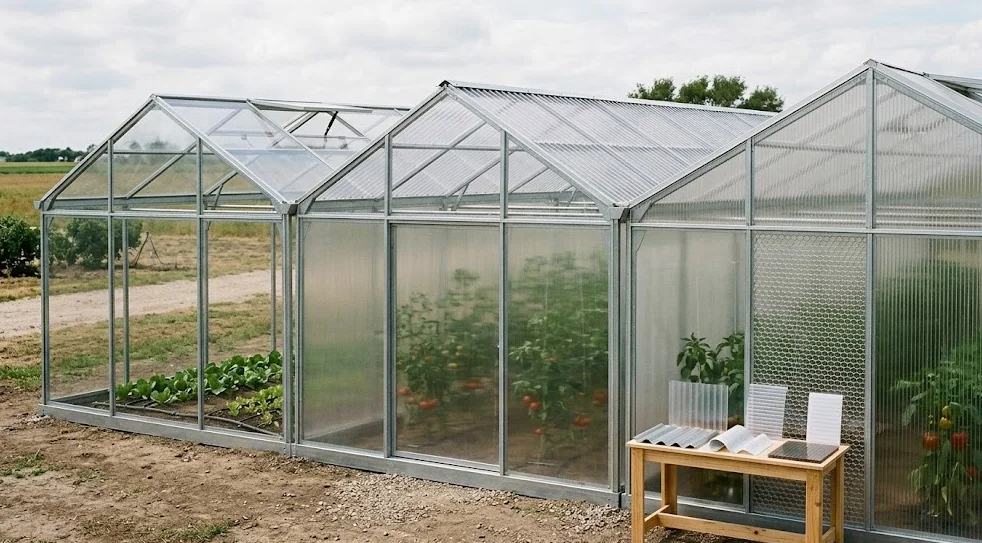
Solid polycarbonate sheets have a continuous, transparent structure. They may be suitable for applications where visual clarity, impact resistance, and a clean appearance are priorities. Yubai Technology lists solid polycarbonate sheets for applications including roofing and greenhouse glazing. Actual light transmission, thickness, and UV protection should be confirmed for the selected product.
Twin-wall polycarbonate panels consist of two outer layers connected by internal ribs. The air space between the layers can improve insulation while keeping the panel relatively lightweight. These panels are commonly considered for greenhouse roofs and walls where daylight and thermal performance both matter.
Multiwall polycarbonate sheets use more complex internal structures, including triple-wall and other configurations. They may suit projects with greater insulation requirements, but performance depends on the specific thickness, internal design, and installation conditions. More layers do not automatically guarantee the best result for every greenhouse.
Corrugated polycarbonate sheets feature a shaped profile that can work well with compatible roofing systems. Before ordering, check the profile dimensions, support arrangement, and fastening method to ensure that the sheets fit the greenhouse frame.
3. Verify UV Protection and Light Performance
Greenhouse coverings must tolerate prolonged outdoor exposure while delivering suitable light for plant growth. UV protection can help protect the panel from sunlight-related degradation, but buyers should understand exactly what the product specification covers.
Ask whether the UV-protective layer is applied to one or both surfaces and which side should face outward during installation. Incorrect orientation may affect the intended performance of products designed with a specific UV-protected surface.
It is also important to distinguish UV protection from visible-light transmission. These are different properties, and a high visible-light transmission rating does not fully describe the panel's response to all wavelengths.
Yubai Technology lists UV-coated options within its polycarbonate sheet range. Its multiwall product information includes a stated 50-micron UV layer and a 10-year warranty. Buyers should verify these details, warranty coverage, and applicable conditions for the exact product being considered.
4. Match Panel Specifications to the Greenhouse Structure
Even a high-quality panel can perform poorly if it is incorrectly installed or used with an unsuitable frame. Panel thickness, dimensions, support spacing, fastening details, and local weather conditions must be considered together.
For greenhouse projects exposed to strong winds or heavy snow, the covering system must be appropriate for the expected loads. Buyers should not assume that a thicker panel automatically makes the entire structure safe; frame strength and installation quality are equally important.
Before ordering polycarbonate greenhouse roofing panels, confirm the following:
- Dimensions and thickness: Ensure the selected sheets fit the planned roof or wall layout.
- Support spacing: Follow the manufacturer's guidance for the specific panel configuration.
- Fasteners and sealing: Use compatible accessories and installation methods.
- Thermal movement: Allow for the expansion and contraction of polycarbonate as temperatures change.
- Weather requirements: Check applicable wind, snow, and building-code requirements.
For large greenhouses or exposed locations, consult a qualified installer or structural professional when necessary.
5. Evaluate the Total Cost of Installation
Searches for home depot polycarbonate greenhouse panels can help buyers compare retail options, standard sizes, and product types. However, the purchase price per sheet is only one part of the total investment.
Installation labor, cutting waste, connectors, sealing materials, maintenance, and replacement costs should also be considered. A low-cost sheet may become less economical if it does not match the frame or requires additional installation work.
For custom greenhouse projects, discuss sheet dimensions, color options, order quantities, and processing requirements before confirming the purchase. Yubai Technology offers several polycarbonate sheet configurations, giving buyers options to evaluate according to project requirements. Product availability, customization, and technical specifications should be confirmed directly with the supplier.
Conclusion
Choosing suitable greenhouse panels requires balancing light transmission, thermal performance, UV protection, structural compatibility, and overall project cost. Solid, twin-wall, multiwall, and corrugated polycarbonate sheets serve different purposes, so the right option depends on the greenhouse design and local growing conditions.
Whether replacing damaged panels or planning a new greenhouse, buyers should compare product-specific technical data, installation requirements, and warranty terms before ordering. With a clear understanding of these factors, homeowners, contractors, and commercial growers can make more informed decisions and select a covering system suited to long-term use.
Yubai Technology's range of solid, corrugated, and multiwall polycarbonate sheets provides options for greenhouse and daylighting applications. Matching the selected panel to the project's actual requirements is the most practical way to balance performance, durability, and cost.