For industrial plants, commercial buildings, and power distribution facilities, electrical equipment must do more than meet the initial project budget. It needs to match the electrical system, operate reliably under expected conditions, and remain accessible for inspection and maintenance throughout its service life.
When evaluating a High Voltage Switchgear Transformer Factory, buyers should look beyond product availability and price. Voltage ratings, transformer compatibility, protection requirements, installation conditions, and technical support all influence whether the equipment is suitable for the project.
Understanding these factors before requesting a quotation can help electrical engineers and procurement teams avoid specification gaps, installation problems, and unnecessary costs.
1. Define the Electrical Requirements Before Purchasing
Every power distribution project has its own operating requirements. Equipment designed for an industrial substation may differ significantly from the cabinets used to distribute power within a factory or commercial building.
Before contacting a supplier, prepare the key electrical information, including rated voltage, rated current, system frequency, short-circuit levels, transformer capacity, and the expected number of incoming and outgoing circuits. Future load growth should also be considered when planning the system.
Providing these details allows the supplier to recommend equipment configurations that better match the intended application. Choosing switchgear based only on its product name or nominal voltage can overlook important differences in protection, insulation, and switching capabilities.
Fujian Yangjia Technology lists KYN28-11kV and KYN61-33kV metal-clad switchgear in its product range. These options may be relevant to different medium-voltage distribution projects, but their suitability should be confirmed against the project's complete technical specifications.
2. Coordinate Switchgear with the Transformer
Switchgear and transformers perform different functions, but they must work together as part of the same electrical distribution system.
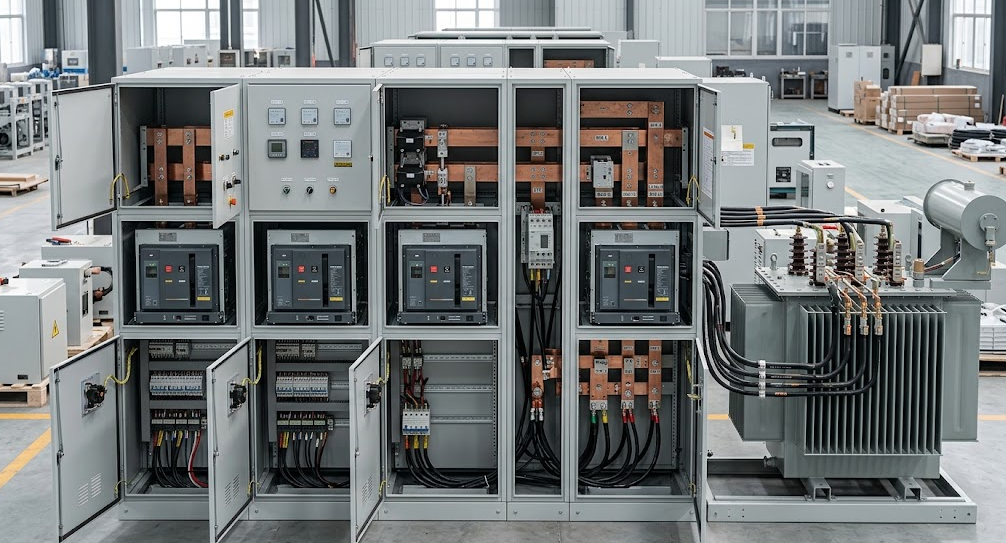
Switchgear is used for switching, isolation, and protection, depending on its configuration. A transformer changes the voltage level to suit downstream distribution networks and electrical loads. Their ratings and protection arrangements must therefore be coordinated during system design.
Before purchasing, engineers should verify the transformer's capacity, primary and secondary voltages, connection arrangement, and intended operating conditions. Circuit-breaker ratings, protection relay settings, and fault-clearing requirements should also be reviewed where applicable.
Proper coordination helps equipment operate within its design limits and allows protective devices to respond appropriately to electrical faults. For industrial facilities, this is particularly important because unplanned power interruptions can affect production schedules and equipment operation.
Rather than selecting each product independently, buyers should evaluate how the transformer, switchgear, and downstream distribution equipment will operate as a complete system.
3. Select Switchgear According to the Application
The correct switchgear configuration depends on voltage level, load requirements, installation space, maintenance practices, and the overall distribution arrangement.
Medium-voltage switchgear
Medium-voltage switchgear is commonly considered for industrial power distribution systems and substations. Metal-clad designs provide an organized arrangement for circuit breakers and associated electrical components.
Fujian Yangjia Technology lists two relevant product categories:
- KYN28-11kV switchgear: An option to evaluate for suitable indoor medium-voltage distribution applications.
- KYN61-33kV switchgear: An option for projects requiring equipment designed for a higher voltage class.
Before selecting either series, confirm the rated voltage, rated current, insulation requirements, short-circuit withstand capability, applicable standards, and installation conditions. The final specification should reflect the project's actual operating requirements.
Low-voltage distribution cabinets
Once a transformer reduces the voltage to the required level, low-voltage switchgear distributes electricity to motors, production machinery, lighting, and other electrical loads.
Fujian Yangjia Technology also lists GGD, GCS, GCK, and MNS low-voltage switchgear options. These cabinet types can be evaluated according to the required feeder arrangement, load characteristics, protection devices, control functions, and available installation space.
Considering medium- and low-voltage equipment together during the design stage can help engineers plan a more coordinated distribution system and reduce potential integration issues.
4. Compare Suppliers Beyond the Quotation Price
The lowest purchase price does not always represent the lowest total project cost. Equipment that fails to meet technical requirements or creates installation and maintenance difficulties may result in additional expenses after delivery.
When comparing a high voltage switchgear manufacturer or transformer equipment supplier, pay attention to the following factors.
Technical specifications: Confirm that the proposed equipment meets the required electrical ratings, configuration, and project documentation.
Safety and protection: Review the required interlocking arrangements, grounding provisions, protective devices, and operating procedures.
Installation and maintenance: Check the cabinet dimensions, connection arrangements, access requirements, and space needed for inspection and servicing.
Technical documentation: Request relevant drawings, component lists, test documentation, and installation and operation instructions.
After-sales service: Clarify warranty coverage, spare-parts availability, technical assistance, delivery responsibilities, and commissioning support.
Comparing these factors alongside the quotation price gives procurement teams a clearer picture of the supplier's suitability for the project.
5. Verify Standards and Environmental Conditions
Electrical equipment must meet the standards and regulatory requirements applicable to its installation location. Buyers should confirm the relevant requirements with their engineering team and local authorities instead of assuming that every product follows the same specifications.
Environmental conditions also influence equipment selection. High humidity, dust, corrosive substances, unusual ambient temperatures, and installation altitude may affect the required enclosure protection or equipment configuration.
To reduce the risk of specification changes later, provide the supplier with accurate site information before production begins. Technical drawings and equipment specifications should be reviewed and approved at the appropriate stage, while installation, testing, and commissioning should be performed by qualified personnel.
These steps help ensure that the selected switchgear is suitable not only on paper but also for the conditions in which it will operate.
6. Why Consider Fujian Yangjia Technology?
Fujian Yangjia Technology offers switchgear products for medium- and low-voltage power distribution applications. Its published product range includes KYN28-11kV and KYN61-33kV switchgear, as well as GGD, GCS, GCK, and MNS low-voltage cabinet series.
For project owners, electrical contractors, and procurement teams, these product categories provide options to evaluate when planning new distribution facilities or upgrading existing installations.
The next step is to provide the supplier with the project's single-line diagram, voltage and load requirements, short-circuit data, installation conditions, and relevant standards. This information can help establish which configurations are worth considering.
Before placing an order, buyers should confirm the complete technical specifications, compatibility with the transformer and downstream system, required testing, delivery scope, and after-sales arrangements.
Learn more about the available options through the Fujian Yangjia Technology switchgear product range.
Conclusion
Choosing a High Voltage Switchgear Transformer Factory is a technical and commercial decision that requires more than checking voltage ratings and comparing prices. System compatibility, fault protection, environmental conditions, maintenance access, and supplier support all affect the suitability of the final equipment.
By defining project requirements early, reviewing technical documents carefully, and coordinating switchgear with the transformer and downstream electrical system, buyers can reduce avoidable risks and make more informed purchasing decisions.
Fujian Yangjia Technology's medium- and low-voltage switchgear range offers products for further evaluation based on the specific requirements of industrial, commercial, and power distribution projects.