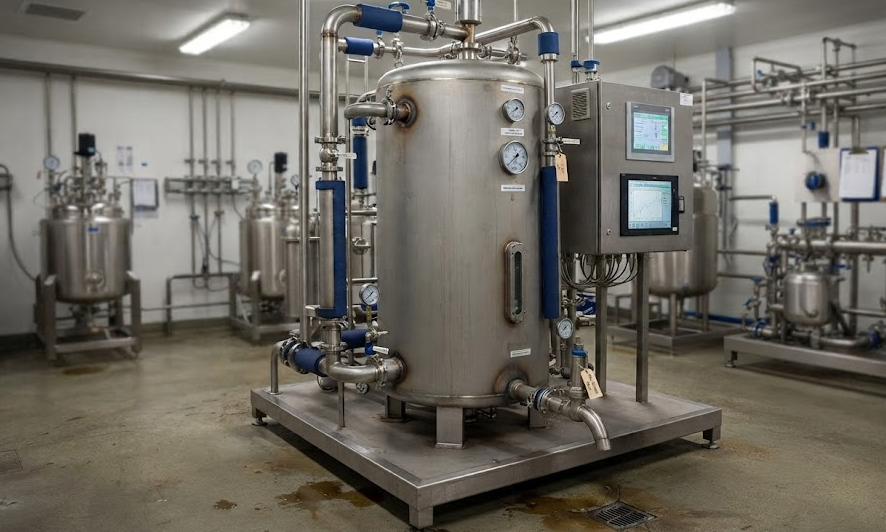
In pharmaceutical manufacturing, biotechnology, food processing, and healthcare sterilization, steam quality plays an important role in process reliability and contamination control. When steam comes into direct contact with products or is used in sterilization equipment, its purity must be carefully managed.
Inadequate steam quality can affect sterilization performance, introduce unwanted contaminants, and lead to failed validation tests or costly production interruptions. For facility engineers, validation specialists, and procurement teams, selecting a reliable industrial pure steam boiler supplier is therefore an important part of designing a dependable process utility system.
Unlike conventional industrial boilers, pure steam generation equipment must address sanitary construction, feedwater quality, separation efficiency, and monitoring requirements. Understanding these factors helps buyers compare suppliers and identify equipment suitable for their applications.
1. Understanding the Difference Between Plant Steam and Pure Steam
Plant steam and pure steam serve different purposes, and they should not be treated as interchangeable when product quality or sterilization is involved.
Conventional plant steam is commonly used for general heating, equipment operation, and other industrial processes. Its quality depends on the boiler feedwater, water treatment program, boiler construction, and operating conditions. Depending on the system, steam may contain treatment chemicals, corrosion products, or entrained water droplets.
Pure steam is generated using appropriately specified feedwater and equipment designed for applications with stringent purity requirements. It is commonly considered for pharmaceutical sterilization, clean-in-place or sterilization-in-place support systems, and other processes where steam quality is critical.
For pharmaceutical applications, the relevant requirements may include condensate conductivity, total organic carbon (TOC), endotoxin levels, and other chemical or microbiological attributes. Applicable pharmacopoeial requirements and project specifications should determine the acceptance criteria.
When evaluating a pure steam generator, buyers should review the entire system, including feedwater preparation, sanitary construction, steam separation, condensate quality, and validation procedures.
2. Key Engineering Features of an Industrial Pure Steam Boiler
A suitable pure steam generation system requires more than a conventional boiler with upgraded materials. Its design must support the intended steam quality and the operating conditions of the facility.
Sanitary Construction and 316L Stainless Steel
Materials in contact with feedwater, generated steam, and condensate require careful selection. 316L stainless steel is commonly used in hygienic process equipment because of its corrosion resistance and suitability for many pharmaceutical and clean utility applications.
Surface finish and fabrication quality are also important. Poorly finished welds, unsuitable surface conditions, or difficult-to-clean internal structures may complicate cleaning and increase contamination risks.
When reviewing a supplier's design, ask for details about wetted materials, weld inspection, surface-finish specifications, passivation procedures, and material traceability. If a particular surface roughness is required, such as Ra ≤ 0.4 µm, it should be confirmed in the technical specification and verified through appropriate documentation.
These requirements should be matched to the intended application rather than assumed to be identical for every pure steam system.
Efficient Steam-Water Separation
Steam quality depends partly on how effectively the generator prevents liquid water droplets from entering the steam outlet. Excessive moisture carryover can affect steam distribution and may transport impurities into downstream equipment.
Pure steam generators may incorporate mechanical separation devices, demisters, or other separation arrangements to control moisture carryover. The appropriate design depends on operating pressure, steam demand, vessel configuration, and feedwater conditions.
Buyers should request documented performance data and relevant test results instead of relying solely on general descriptions such as high dryness or superior separation efficiency.
The steam quality required at the point of use should guide equipment selection, particularly for sterilizers and pharmaceutical process systems.
Automated Controls and Process Monitoring
Modern steam generation equipment often uses programmable logic controllers (PLCs) and touchscreen interfaces to monitor operating conditions and manage system functions.
Depending on the configuration, monitoring may cover pressure, temperature, feedwater supply, alarms, and other operating parameters. Data recording can also support maintenance, troubleshooting, and process qualification.
For regulated pharmaceutical facilities, electronic records and control systems must be assessed against the applicable data integrity and validation requirements. Compliance with FDA 21 CFR Part 11, where relevant, depends on the complete system configuration, software functionality, procedures, and implementation. It should not be assumed from the presence of a PLC alone.
Before purchasing, determine which control functions, records, alarm histories, and validation documents are included in the proposed system.
3. Operational Considerations for Pharmaceutical and Healthcare Facilities
Selecting a pure steam generator involves balancing process requirements with operating costs and maintenance needs.
Sterilization reliability: Steam quality, temperature, pressure, and exposure time all influence sterilization performance. The complete system must be validated for its intended application.
Energy consumption: Heat recovery, insulation, load matching, and efficient control strategies may help reduce energy use. Actual savings depend on the facility's steam demand, operating schedule, and equipment configuration.
Maintenance accessibility: Inspection ports, accessible components, appropriate valves, and a well-planned maintenance layout can simplify servicing. Cleaning-in-place (CIP) capability should be confirmed according to the equipment design and process requirements.
System integration: Feedwater treatment, pumps, piping, condensate handling, and downstream distribution should be considered during equipment selection. A generator that meets its individual specifications may still require additional engineering to operate effectively within the overall utility system.
Evaluating these factors early can help reduce commissioning difficulties and improve long-term operational planning.
4. What to Check When Comparing Pure Steam Suppliers
Choosing a clean steam generator manufacturer requires a structured technical review. Product descriptions and quotations alone rarely provide enough information for regulated applications.
Procurement teams should consider the following points:
- Material documentation: Request material certificates and traceability records for relevant wetted and pressure-retaining components.
- Fabrication and surface treatment: Review welding procedures, inspection records, surface-finish requirements, and passivation documentation where applicable.
- Performance verification: Confirm the proposed operating range, steam output, separation performance, and available test reports.
- Regulatory and engineering requirements: Identify the standards, codes, and qualification documentation required for the specific project.
- Automation and data management: Establish which control functions, electronic records, alarms, and validation support are included.
- Installation and after-sales support: Clarify commissioning responsibilities, maintenance recommendations, spare parts availability, and technical service arrangements.
Factory acceptance testing (FAT) can help verify selected equipment functions and agreed specifications before shipment. Site acceptance testing (SAT) and qualification activities may also be needed after installation, depending on the project.
A clear division of responsibilities between the supplier, engineering contractor, and end user helps avoid gaps during commissioning and validation.
5. Nobeth Group and Pure Steam Generation Solutions
Nobeth Group supplies industrial steam generation equipment for different application requirements. Buyers considering its equipment for pharmaceutical, healthcare, or other process industries should assess the proposed configuration against their steam quality targets, capacity requirements, and facility conditions.
For a pure steam project, the technical discussion should cover feedwater specifications, required steam output, operating pressure, wetted materials, separation design, control functions, and documentation requirements.
Where a packaged or skid-mounted system is being considered, buyers should also confirm the scope of supply, including feed pumps, pretreatment components, piping, valves, and other auxiliary equipment. The exact configuration should be established through technical review rather than assumed from the supplier's general product range.
A project-specific evaluation allows the equipment selection to reflect the actual application instead of relying on broad claims about performance or regulatory suitability.
6. Prepare Your Requirements Before Requesting a Quotation
Providing detailed information at the quotation stage can help an industrial pure steam boiler supplier propose a more appropriate solution.
Useful information includes the required steam capacity, operating pressure, feedwater quality, intended application, daily operating schedule, installation space, and applicable regulatory requirements.
For pharmaceutical facilities, buyers should also identify condensate quality criteria, documentation expectations, qualification needs, and any site-specific engineering standards.
These details help suppliers define the equipment scope, identify additional system components, and establish realistic delivery and commissioning requirements.
Conclusion
Selecting an industrial pure steam boiler supplier requires careful consideration of steam purity, sanitary construction, separation performance, automation, documentation, and lifecycle support.
For pharmaceutical manufacturing, biotechnology, and healthcare sterilization, the equipment must be evaluated as part of the complete utility system. Material certificates, documented performance data, appropriate testing, and clear validation responsibilities are more useful indicators than general performance claims alone.
Nobeth Group can be considered as a supplier during this evaluation process. By defining process requirements in advance and verifying the proposed equipment against applicable standards, project teams can make better-informed decisions about pure steam generation and long-term utility reliability.