While rails and sleepers form the main track structure, the fastening components connecting them are equally important. Incorrectly selected or poorly matched components can create installation difficulties, affect track geometry, and increase maintenance requirements.
For railway contractors, infrastructure operators, and component distributors, selecting suitable railway sleeper fixings requires careful consideration of track design, material properties, operating conditions, and project specifications. Understanding these factors helps buyers source compatible products and manage procurement risks.
1. Understanding the Role of Railway Sleeper Fixings
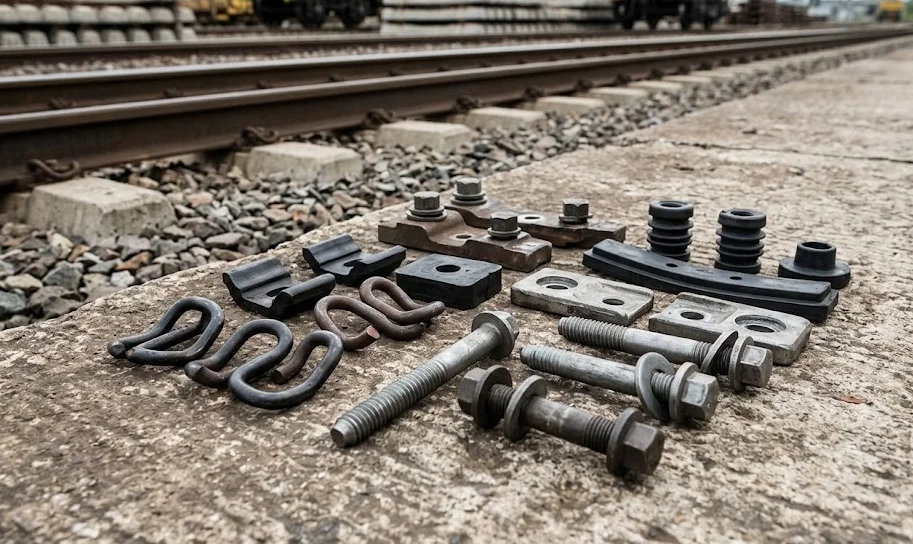
Railway sleeper fixings connect the rails to the sleepers and help maintain the required track gauge and rail position. Depending on the fastening system, the assembly may include elastic rail clips, screw spikes, rail bolts, tie plates, shoulders, rail pads, nuts, washers, and insulating components.
Each part has a specific function within the complete assembly. Rail clips provide the required clamping force, while screw spikes and bolts secure components to the designated fixing points. Rail pads provide an interface between the rail and sleeper, and insulating components help maintain electrical separation where the track design requires it.
These components must be compatible in terms of dimensions, connection interfaces, and performance requirements. A rail clip intended for one fastening arrangement, for example, may not fit a sleeper designed for a different shoulder configuration.
When purchasing railway fastening products, buyers should therefore evaluate the complete system rather than selecting individual components based only on appearance or general product descriptions.
2. Choose a Fastening System According to Track Conditions
Different railway applications require different fastening configurations. Conventional railways, heavy-haul lines, and urban rail networks may have distinct requirements for load resistance, vibration management, electrical insulation, and maintenance access.
Several factors should be considered during product selection:
- Axle loads and traffic intensity: Fastening components must meet the mechanical requirements of the intended railway operation.
- Rail and sleeper specifications: Rail profiles, sleeper materials, and fixing interfaces determine which components can be installed correctly.
- Vibration and noise control: Suitable rail pads and resilient components can help manage vibration when selected as part of an appropriate system.
- Electrical insulation: Insulating components must meet the relevant requirements for tracks with electrical isolation needs.
- Maintenance arrangements: The fastening design should support the project's inspection, replacement, and servicing procedures.
HuiBo Railway provides different fastening products and system configurations, including E-clip, SKL clip, Nabla clip, J2, and FC1501. Each system has its own design characteristics and application requirements. Buyers should compare the available configurations against approved drawings and project specifications before making a selection.
3. Evaluate Material Properties and Corrosion Protection
Railway fastening components are exposed to repeated loading, friction, moisture, and temperature fluctuations. In coastal areas or other corrosive environments, additional attention may be required when selecting materials and surface treatments.
Different components have different performance priorities. Spring clips need appropriate elasticity and fatigue resistance, while bolts and screw spikes must meet the specified mechanical and dimensional requirements. Rail pads and insulators must also provide properties suitable for their intended operating conditions.
Surface treatment is another consideration. Depending on the component material and project requirements, galvanizing or other approved protective treatments may help improve corrosion resistance.
Rather than relying on broad claims about durability, buyers should request relevant material specifications, inspection records, and test reports. These documents help establish whether the supplied components meet the technical requirements of the project.
Manufacturing consistency is equally important. Stable dimensions and controlled production processes help reduce fitment problems during installation and replacement.
4. Check Component Compatibility Before Installation
Components that look similar are not necessarily interchangeable. Differences in dimensions, material properties, thread specifications, or connection interfaces can prevent a replacement part from fitting correctly.
Before ordering railway sleeper fixings, buyers should verify the following information:
- Rail section and fastening-system configuration.
- Sleeper type, material, and fixing arrangement.
- Required component dimensions and material grades.
- Applicable standards and project-specific technical requirements.
- Installation methods and inspection procedures.
- Quality documentation and product traceability requirements.
For track renewal and maintenance projects, original part numbers, approved engineering drawings, and reference samples can help identify the correct products. Any proposed substitution should still undergo technical review before installation, particularly where the components are part of a safety-critical railway system.
Confirming these details before procurement can reduce the likelihood of rejected deliveries, installation delays, and unnecessary replacement costs.
5. Consider the Total Cost of Railway Fastening Procurement
Unit price is only one factor in evaluating railway fastening suppliers. Delivery reliability, batch consistency, product conformity, packaging, and technical support can also affect the total cost of a project.
For example, components that require additional adjustment during installation may increase labor time. Products that fail to meet specified requirements can also lead to inspection delays, reordering, and additional logistics expenses.
When comparing suppliers, buyers should review production lead times, inspection arrangements, available documentation, and the supplier's ability to maintain consistent specifications across repeat orders.
HuiBo Railway offers a range of fastening components, including rail clips, screw spikes, rail bolts, tie plates, shoulders, rail pads, nuts, and washers. The company also states that customized products can be developed according to customer samples or technical drawings, subject to confirmation of the relevant specifications.
For distributors managing several railway projects, standardized component references and clear product documentation can make purchasing, inventory control, and replacement ordering more manageable.
6. What Information Should You Provide to a Manufacturer?
Clear technical communication helps manufacturers understand the application and determine the appropriate product configuration.
When requesting a quotation for railway sleeper fixings, buyers should provide available engineering drawings, product references, required quantities, material specifications, applicable standards, and inspection requirements.
For customized components, it is also important to confirm dimensional tolerances, surface treatment, testing arrangements, production schedules, packaging, and delivery terms before production begins.
Buyers should establish which quality documents will accompany the shipment and how individual batches will be identified. These details support traceability and make it easier to verify deliveries against the purchase agreement.
Working with a supplier that understands how individual fasteners interact with the complete track assembly can also improve technical coordination during project preparation.
HuiBo Railway: Railway Fastening Products for Project Requirements
HuiBo Railway supplies railway fastening components and system options for different infrastructure applications. Its product range includes rail clips, screw spikes, bolts, tie plates, rail pads, and other related components.
For contractors, distributors, and infrastructure maintenance teams, product selection should begin with the approved track design and the relevant technical requirements. Buyers can review the available product range and discuss compatibility with HuiBo Railway using drawings, samples, and application details.
Conclusion
Selecting appropriate railway sleeper fixings involves more than comparing individual products or purchase prices. Track compatibility, material performance, environmental exposure, manufacturing consistency, and quality documentation all influence the suitability of a fastening solution.
By confirming technical requirements before ordering, railway contractors and distributors can reduce component mismatch risks and improve procurement planning. HuiBo Railway offers a range of railway fastening products for buyers evaluating components for railway construction, track maintenance, and replacement projects.