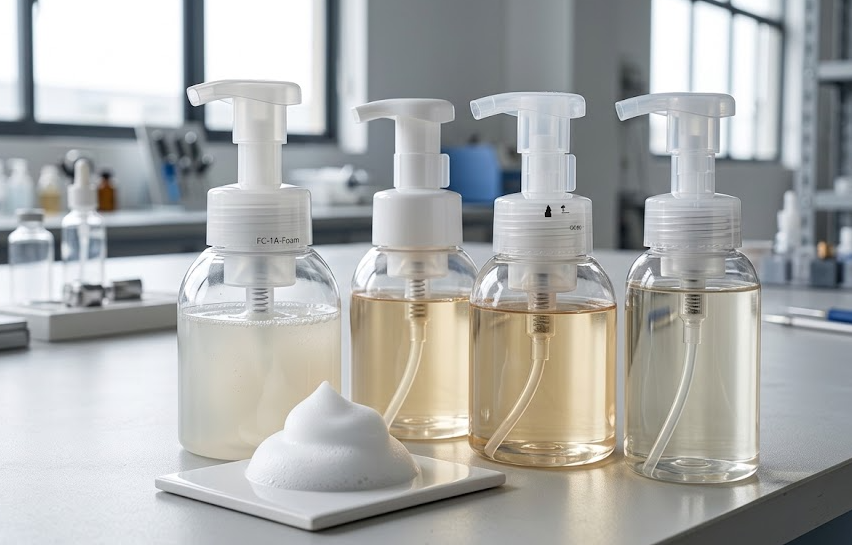
For cosmetic brands, personal care manufacturers, and packaging distributors, selecting a suitable dispensing pump is an important part of product development. A pump needs to do more than match the bottle's appearance. It should work with the formula, deliver foam consistently, fit securely, and remain reliable during storage and transportation.
A poorly matched dispenser can lead to uneven foam, difficult operation, leakage, or unnecessary packaging expenses. This is why businesses sourcing a foam pump dispenser should evaluate the complete packaging system before placing a bulk order.
Foam pump dispensers are widely used for facial cleansers, hand soaps, and other suitable personal care products. Understanding the main selection factors can help businesses find packaging that meets product requirements and provides a better user experience.
1. Check Formula Compatibility First
The formulation is one of the first things to consider when choosing a foam pump. Not every liquid is suitable for every foaming mechanism. Viscosity, ingredients, and other physical properties can influence how effectively a pump mixes the liquid with air to produce foam.
For example, a facial cleanser may have different dispensing requirements from a liquid hand soap. If a formula is too thick or contains particles that are incompatible with the pump design, dispensing may become inconsistent or difficult.
When sourcing a foam pump dispenser for facial cleanser or hand soap, provide the supplier with information about the intended formulation. Whenever possible, test samples using the actual product rather than relying solely on general descriptions or demonstrations with another liquid.
This allows brands to evaluate foam formation, dispensing smoothness, and performance under normal usage conditions before committing to a large order.
2. Evaluate Foam Quality and Dispensing Performance
The dispensing experience can influence how consumers perceive a personal care product. Foam that is easy to dispense and consistent from one press to the next can make everyday products more convenient to use.
When testing a foaming soap dispenser pump, consider several practical questions:
- Does the pump produce foam with the desired texture?
- Is the amount dispensed reasonably consistent with repeated use?
- Is the pump comfortable to press?
- Does it operate smoothly after multiple dispensing cycles?
- Does it require excessive priming before foam begins to appear?
The answers will depend on the formula, pump construction, and intended application. Testing several samples can help brands compare options and identify a design that meets their product requirements.
Rather than focusing on foam appearance alone, evaluate the overall dispensing experience, including ease of use and consistency during repeated operation.
3. Confirm Bottle Neck and Dip-Tube Compatibility
Even a well-performing pump may cause packaging problems if it does not fit the bottle properly. Compatibility should therefore be confirmed before ordering a plastic foam pump dispenser in bulk.
Important details include the bottle neck finish, thread dimensions, closure design, and dip-tube length. The pump should attach securely to the bottle and allow the product to be dispensed effectively.
Dip-tube length deserves particular attention. A tube that is too short may leave more product at the bottom of the container, while an unsuitable tube length may interfere with the packaging arrangement. Bottle shape and internal dimensions can also affect how much product remains accessible.
If a brand uses several bottle sizes, each bottle-and-pump combination should be tested individually. Confirming the fit before mass production can reduce assembly issues, rework, and packaging waste.
4. Test Leakage Resistance Before Distribution
Leakage is a concern for products shipped through wholesalers, retail channels, and e-commerce platforms. A leaking package can damage surrounding products, create customer complaints, and increase the cost of handling returns or replacements.
When comparing foam pump dispenser suppliers, ask about the pump's sealing structure, closure design, and any available locking or protective features. The relevant specifications should be confirmed for the exact model being considered.
Testing should involve the complete package, including the filled bottle, pump, closure, and outer packaging. Depending on the distribution environment, businesses may need to evaluate leakage after handling, changes in package orientation, and temperature variations.
These checks are especially important before launching a new product or moving to a different packaging supplier. A pump's performance should be assessed as part of the finished package rather than in isolation.
5. Consider Quality Control and Repeat Orders
For businesses purchasing packaging components in large quantities, consistency between batches is essential. Differences in dimensions, assembly, or sealing components can affect how the pump fits the bottle and performs during use.
Before placing an order, buyers should clarify the supplier's sample approval process, quality inspection requirements, minimum order quantity, production lead time, and procedures for handling defective products.
For products with ongoing demand, repeat-order consistency also matters. Confirm whether the supplier can maintain the agreed specifications across future batches and whether changes to materials or product design will be communicated in advance.
Planning these details early can help manufacturers manage inventory, maintain packaging consistency, and reduce interruptions to production.
6. How to Evaluate a Foam Pump Dispenser Manufacturer
Choosing a foam pump dispenser manufacturer involves more than comparing unit prices. A lower-priced pump may not provide better value if it is incompatible with the formula, difficult to operate, or unsuitable for the bottle.
Buyers should compare product specifications, material information, available models, customization options, quality control procedures, and supply arrangements. Samples should be tested against the project's actual requirements before the final specification is approved.
Rongcheng Plastic Industry displays a range of pump-head products on its official product website. Businesses interested in its foam pump dispenser options can contact the supplier to confirm available models, bottle compatibility, material details, customization possibilities, and order requirements.
To make the evaluation more efficient, buyers should prepare the intended application, formula characteristics, bottle dimensions, preferred pump style, and estimated order volume before requesting a quotation.
Conclusion
Selecting the right foam pump dispenser requires a balance between formula compatibility, foam quality, bottle fit, leakage resistance, and consistent manufacturing. Each factor can influence the performance of the finished product and the experience of the end user.
For cosmetic brands, personal care manufacturers, and packaging distributors, testing samples with the actual formula and bottle is one of the most practical ways to reduce sourcing risks. By confirming technical specifications and supply requirements with Rongcheng Plastic Industry before bulk purchasing, businesses can make more informed packaging decisions and choose a dispensing solution suited to their products.
https://www.ringgz.com/how-to-choose-the-right-foam-pump-dispenser-for-your-product.html