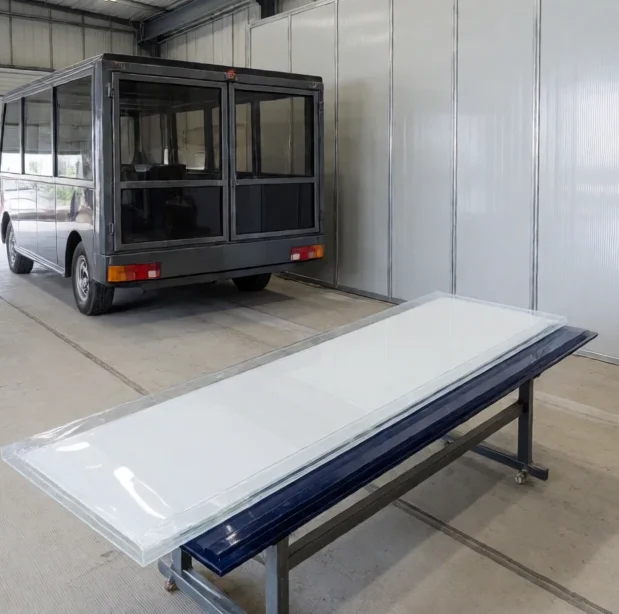
Glass has traditionally been one of the main choices for architectural glazing, but it is not the only option available today. For projects that require natural light, impact resistance, lower weight, or easier installation, polycarbonate glazing sheets can offer a practical alternative.
Polycarbonate sheets are available in several structures and designs. Solid, multiwall, corrugated, and interlocking sheets can provide different levels of light transmission, insulation, strength, and installation flexibility.
Because of these differences, selecting a suitable sheet should start with the requirements of the building rather than simply choosing the thickest or lowest-priced product.
Consider the Application First
The installation location should be the starting point when selecting a polycarbonate sheet.
Skylights, canopies, greenhouses, walkways, partitions, and roofing systems do not have the same requirements. For example, a solid polycarbonate sheet may be a better option when high clarity and impact resistance are important. A multiwall sheet may be more suitable when reducing weight and improving thermal insulation are higher priorities.
The building structure also needs to be considered. A lightweight glazing material can reduce the load on the supporting frame, but the selected sheet still needs to provide suitable stiffness for its intended span and local environmental conditions.
Understanding the actual application before comparing products can make the purchasing process much easier.
Solid vs. Multiwall Polycarbonate Sheets
The structure of the sheet is one of the most important factors to evaluate.
Solid polycarbonate sheets have a continuous structure and can provide a clear appearance similar to glass while offering good impact resistance. Depending on the product, additional functions may include UV protection, surface treatment, light diffusion, anti-scratch properties, or flame-retardant performance.
Multiwall polycarbonate sheets have internal air chambers. These chambers reduce the overall weight of the material and can provide better thermal insulation. As a result, they are commonly considered for applications such as skylights, greenhouses, canopies, and roofing.
Neither structure is automatically better. The right choice depends on the project's priorities, including clarity, insulation, weight, strength, and energy performance.
UV Protection Matters for Outdoor Applications
Polycarbonate used outdoors is exposed to sunlight for long periods, so UV protection should be part of the purchasing checklist.
Although polycarbonate offers good impact resistance, continuous ultraviolet exposure can affect unprotected material over time. Many outdoor glazing products therefore use a UV-protective layer to improve long-term performance.
Buyers should check the product specifications to understand whether the sheet has single-sided or double-sided UV protection. Installation should also follow the manufacturer's instructions. If protection is provided on only one side, that surface normally needs to face the exterior or the direction of sunlight.
A small installation mistake can affect the expected service life of the sheet, so this detail should not be overlooked.
Think About Daylight and Light Control
One of the main advantages of polycarbonate glazing is its ability to introduce natural light into a building.
However, maximum transparency is not always the ideal choice. Some projects need to reduce glare or distribute incoming light more evenly rather than simply allowing as much light through as possible.
Different colors, textures, structures, and surface treatments can provide different lighting effects. Yubai Technology offers various specialized polycarbonate products, including light-diffusion, frosted, prismatic, embossed, and anti-infrared solid sheets.
These options allow buyers to consider daylight, visual comfort, solar exposure, and the intended appearance of the building together.
Installation Should Be Considered Before Purchasing
The performance of a polycarbonate sheet depends not only on the material itself but also on how it is installed.
Before placing an order, buyers should confirm the required dimensions and thickness as well as support spacing, fastening methods, edge treatment, and allowance for thermal expansion and contraction.
Multiwall sheets require additional attention because their internal channels need to be protected from dust and moisture. Proper end sealing and installation direction can help maintain the intended performance of the sheet.
For larger construction projects, these installation details should be discussed before the material is ordered. This helps prevent problems caused by unsuitable accessories or an incompatible installation system.
Choose According to the Working Environment
The environment in which the sheet will be used can change the ideal product choice.
A greenhouse may place greater importance on daylight transmission and thermal performance. A commercial canopy may require a combination of impact resistance, appearance, and weather resistance. Industrial buildings may have additional requirements, such as flame retardancy, anti-static properties, or other functional characteristics.
Yubai Technology provides several categories of polycarbonate products, including solid, corrugated, hollow, Thermoclick, and U-Locked sheet systems. Its range also includes functional solid-sheet options designed for different application requirements.
Having several sheet structures available allows buyers to compare solutions based on the actual project rather than trying to use the same type of sheet everywhere.
Why Work With Yubai Technology?
Yubai Technology focuses on polycarbonate sheet products and related application solutions. Its product range covers major PC sheet types as well as specialized functional options.
For architects, contractors, distributors, and industrial buyers, this range can make sourcing more flexible, particularly when different sections of a project require different glazing characteristics.
Instead of selecting a product based only on thickness or appearance, buyers can compare sheet structure, light performance, installation requirements, and functional properties according to the intended use.
Final Thoughts
Choosing polycarbonate glazing sheets is ultimately about matching the material to the project.
Solid, multiwall, corrugated, and interlocking polycarbonate sheets each offer different advantages. Factors such as application, impact resistance, insulation, light transmission, UV protection, environmental conditions, and installation method should all be considered before making a final decision.
For contractors, architects, and material buyers, evaluating these factors in advance can help avoid unsuitable product choices and installation problems. With the right specification and a supplier such as Yubai Technology, polycarbonate glazing can provide a practical combination of daylight, durability, lower weight, and installation flexibility for a wide range of building applications.
https://www.yubaikj.com/polycarbonate-glazing-sheets-a-complete-buying-guide.html