When developing a food product, taste is only one part of the equation. Texture, thickness, flow, and stability can all influence how a product feels to consumers and how well it performs during production and storage.
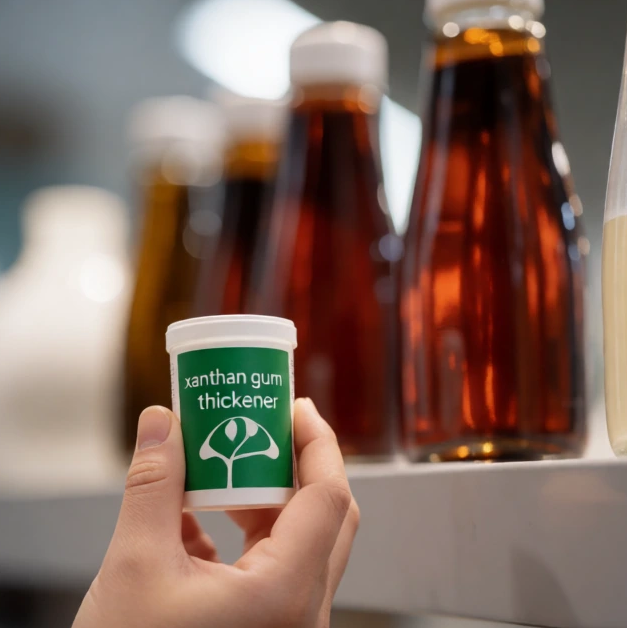
For this reason, xanthan gum thickener has become a useful ingredient in many food formulations. It can increase viscosity at relatively low addition levels and help manufacturers achieve a more stable texture in products such as sauces, baked foods, and other formulated foods.
However, buying xanthan gum in bulk requires more consideration than simply finding the lowest price. Food manufacturers should also look at viscosity, particle size, quality specifications, storage requirements, documentation, and the supplier's ability to provide consistent products.
Why Is Xanthan Gum Used as a Food Thickener?
Xanthan gum is a microbial polysaccharide widely used as a thickener and stabilizer. Its ability to build viscosity with a relatively small amount makes it practical for many food applications.
Instead of adding a large quantity of solid ingredients to change the consistency of a formulation, manufacturers can use a suitable amount of xanthan gum to adjust thickness and flow characteristics.
It can also help maintain product structure during processing and storage. However, its performance is influenced by other factors in the formulation. Ingredients such as salts, pH, other hydrocolloids, and processing conditions can all affect the final result.
Therefore, manufacturers should select xanthan gum based on the specific product and production process rather than assuming that one grade will work equally well in every application.
Important Quality Factors to Check
When purchasing food grade xanthan gum, product specifications are an important starting point.
For example, Yonkerchem's Xanthan Gum is described as a cream-white to light-yellow free-flowing powder. The specification states that 95% passes through an 80-mesh screen. Its listed viscosity requirement is at least 1,200 cps under the specified test conditions, with a reported value of 1,492 cps.
Other listed quality parameters include pH, loss on drying, ash, heavy metals, and microbiological requirements.
These details are useful when comparing different suppliers because ingredient consistency can have a direct effect on production. A manufacturer should request an up-to-date specification sheet and COA when assessing a potential supplier.
How Much Xanthan Gum Is Needed?
The right dosage depends on the formulation. There is no universal amount that can be applied to every food product.
Factors such as the desired thickness, recipe composition, processing method, and interaction with other ingredients can all change the amount required.
Yonkerchem gives 0.2% as a commonly used reference ratio, while also indicating that the actual dosage can be adjusted according to the formulation.
For commercial food production, it is better to conduct small formulation trials before setting the final dosage. Even a relatively small change in xanthan gum concentration can affect viscosity and mouthfeel.
Common Uses of Xanthan Gum Thickener
Different food applications may have different requirements for viscosity and texture. Xanthan gum is commonly considered for several types of formulated products.
Sauces:
Xanthan gum can increase viscosity and help create a more uniform texture. This can be useful for sauces that need controlled flow and a stable consistency.
Baked foods:
In selected baking formulations, xanthan gum can contribute to structure, binding, and texture. Its usefulness depends on the recipe and the other ingredients being used.
Pet supplies:
Xanthan gum may also be used in certain formulated pet products where texture or thickening is required.
Yonkerchem lists sauces, baking, and pet supplies among the applications for its Xanthan Gum product.
Supplier Capability Is Also Important
A suitable ingredient is only part of a successful purchasing decision. For manufacturers buying raw materials regularly, supply reliability can be just as important as the product itself.
Unexpected shortages, inconsistent batches, or incomplete documentation can create problems for production planning and quality control.
Yonkerchem states that it works with more than 1,000 qualified factories in China and provides services covering procurement, quality inspection, documentation, logistics, and technical support. Its product range also includes other food ingredients such as thickeners, sweeteners, preservatives, emulsifiers, phosphates, and vitamins.
For companies sourcing several food additives, having access to a broader ingredient supply network can simplify purchasing and supplier management.
How to Select the Right Xanthan Gum
The best xanthan gum thickener should be selected according to the final application rather than price alone.
A sauce manufacturer may be more concerned with viscosity and flow, while a baking company may place greater importance on texture and formulation compatibility. Production conditions and storage requirements should also be considered.
Before placing a large order, manufacturers can evaluate several factors, including:
- Product specifications and COA
- Viscosity performance
- Particle size
- Dosage requirements
- Compatibility with the formulation
- Packaging and storage conditions
- Batch-to-batch consistency
- Production and supply capacity
Testing the ingredient in the actual formulation is also a practical way to confirm whether it meets the production requirements.
Finding a Reliable Xanthan Gum Supplier
For food manufacturers, choosing a xanthan gum manufacturer and supplier should involve both product performance and long-term supply capability.
Yonkerchem provides Xanthan Gum for food-related applications and supports customers with product documentation and broader food-ingredient sourcing services. This can give manufacturers another option when they need a stable supply of xanthan gum and other formulation ingredients.
Ultimately, consistent raw materials are an important foundation for consistent food products. By looking beyond price and evaluating quality, application performance, documentation, and supplier reliability, manufacturers can make more informed decisions when purchasing xanthan gum in bulk.