
Lipid nanoparticles (LNPs) have become an important platform in modern drug delivery research. They are widely investigated for delivering mRNA, siRNA, gene-editing materials, and other nucleic acid payloads.
However, developing a reliable LNP formulation can be challenging. Particle size, particle distribution, encapsulation efficiency, and formulation stability can all be influenced by relatively small changes in the mixing process. As research moves from early experiments toward more repeatable production, controlling these variables becomes increasingly important.
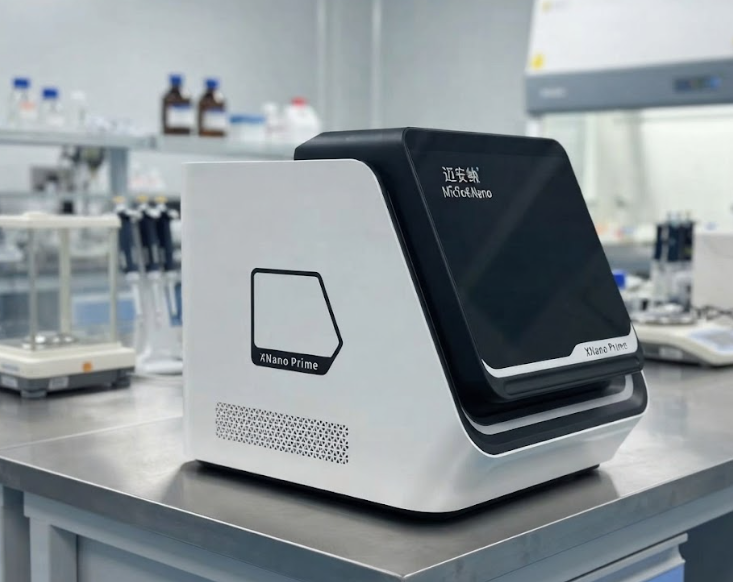
A Custom Microfluidic LNP Formulator offers one way to address this challenge. Rather than using the same equipment configuration for every application, researchers and manufacturers can select a system based on their formulation, volume, workflow, and process requirements.
XGen Bio focuses on microfluidic solutions for LNP formulation, providing equipment designed to support different stages of formulation development and production.
Why a Custom LNP Formulation System Can Be Useful
Not every LNP project follows the same process.
Different lipid compositions, nucleic acid materials, concentrations, flow conditions, and production volumes may require different equipment settings. A standard system may be suitable for one project but less convenient when the formulation or production requirements change.
A customized microfluidic system allows the equipment configuration to be considered together with the customer's actual process.
For example, a research laboratory working on formulation screening may prioritize small sample volumes and flexible operation. A biopharmaceutical manufacturer may have greater requirements for throughput, process control, and integration with downstream equipment.
This makes customization particularly valuable for teams that expect their formulation work to develop over time.
Improving Control During LNP Mixing
Mixing is one of the key steps in LNP formation. The lipid phase and aqueous phase need to come together under controlled conditions, and changes in the mixing environment can influence the characteristics of the nanoparticles produced.
Microfluidic technology provides a controlled fluid environment in which the two phases can be brought together through small channels. This allows researchers to establish defined process conditions and repeat them across different experiments.
For formulation development, repeatability is especially useful. Once a promising formulation has been identified, researchers need to reproduce the process while adjusting other variables.
A microfluidic LNP formulator can therefore become more than a mixing device. It can serve as part of a controlled development workflow, helping researchers compare formulations and understand how process conditions affect the final nanoparticles.
Supporting mRNA, siRNA, and Other Nucleic Acid Applications
LNP technology is being explored for a wide range of applications. These include:
- mRNA delivery
- siRNA delivery
- Gene-editing research
- Vaccine development
- Protein expression studies
- Nucleic acid delivery
- Personalized medicine research
The priorities can vary significantly between these applications.
An mRNA project may require a particular balance of particle characteristics and encapsulation performance, while another project may focus more heavily on formulation stability or material efficiency.
This is why a Custom Microfluidic LNP Formulator for mRNA should not be viewed as a one-size-fits-all piece of equipment. The system should be selected according to the formulation strategy and the development stage.
Thinking About Scale Before It Becomes a Problem
Scalability is another issue that researchers should consider early.
A formulation that performs well at a small laboratory scale may not behave exactly the same way when the production volume increases. Changes in the mixing environment can affect the resulting nanoparticles, making scale-up more complicated than simply increasing the amount of material.
Selecting suitable microfluidic equipment from the beginning can help researchers establish a more consistent process foundation.
For example, laboratory teams may begin with small-scale formulation screening before moving toward process optimization and pilot production. Having equipment that can accommodate changing requirements may reduce the need to completely redesign the workflow at every stage.
For manufacturers, this can make development planning more straightforward.
What to Look for When Selecting a Custom Microfluidic LNP Formulator
The best equipment is not necessarily the system with the highest throughput. Buyers should consider how the equipment fits their complete formulation workflow.
Formulation Compatibility
The system should be appropriate for the intended lipid components, nucleic acid materials, concentrations, and formulation process.
Production Requirements
Current production volume is important, but future requirements should also be considered. Equipment that can adapt as the project develops may offer greater long-term value.
Process Repeatability
Researchers need to reproduce successful experiments. Consistent control of important process conditions can make formulation comparison and optimization easier.
Maintenance and Fluid Handling
The fluid path and operating components should be practical for laboratory or production environments. Easy maintenance can also help reduce unnecessary interruptions.
Flexibility
LNP research continues to evolve. A flexible system can be useful when researchers change formulations, explore new payloads, or adjust their production strategy.
Why XGen Bio?
Choosing a custom LNP formulation system involves more than comparing technical specifications. The supplier's understanding of the application is also important.
XGen Bio focuses on microfluidic technology for LNP formulation and works around different formulation and process requirements. Its approach is centered on providing equipment that fits the customer's workflow rather than treating every project as the same application.
For research teams, this can be useful when moving from initial formulation experiments to more structured process development. For biopharmaceutical manufacturers, customized equipment can also provide a foundation for future scale-up and production planning.
The key is to start with the actual formulation requirements and then determine what equipment configuration makes the most sense.
Building a More Practical LNP Development Workflow
Developing an LNP formulation involves many variables, and equipment selection is an important part of the overall process. Consistent mixing, controlled operating conditions, repeatable experiments, and scalability all need to be considered together.
A Custom Microfluidic LNP Formulator can give researchers and manufacturers more flexibility than a fixed, standard configuration. It can be adapted around different formulation materials, production volumes, and workflow requirements.
For teams working on mRNA, siRNA, gene-editing components, or other nucleic acid delivery systems, the right microfluidic platform can make formulation development more organized and repeatable.
With its focus on microfluidic LNP formulation solutions, XGen Bio provides an option for organizations looking to develop a more flexible approach to LNP research and production.