Steam is an essential part of many industrial processes. Pharmaceutical plants, food factories, chemical facilities, textile manufacturers, and other production sites all depend on a stable steam supply. As energy prices continue to change and environmental and safety requirements become stricter, many companies are reconsidering whether traditional boiler systems can still meet their needs.
For this reason, purchasing a modern Gas&Oil Steam Boiler involves more than checking the rated steam capacity. Fuel efficiency, heat recovery, construction quality, safety protection, maintenance, and long-term operating costs all need to be considered.
Nobeth Group's Gas&Oil Steam Boiler is designed around these requirements, combining sealed construction, high-efficiency heat exchange, energy recovery, and multiple safety protection systems.
1. Strong Sealing Helps Improve Boiler Reliability
One common problem with steam boilers is leakage. Steam or flue gas escaping through weak joints can reduce efficiency while also creating potential safety and environmental problems.
Nobeth Group uses wide steel plate welding throughout the main pressure boundary of its boiler. Instead of relying heavily on multiple joint connections, the welded structure creates a more continuous and sealed construction.
This design can help reduce steam and gas leakage while maintaining structural stability during repeated heating and cooling cycles.
The construction is also useful when equipment needs to be transported or relocated. Industrial boilers may sometimes be moved between production facilities or project sites. A strong welded structure can better withstand transportation and handling compared with systems that rely on numerous segmented or bolted connections.
For mobile projects, rental applications, and facilities where equipment relocation may be necessary, this type of construction can help reduce installation and recommissioning work.
2. Heat Exchange Design Affects Fuel Consumption
When comparing a gas steam boiler or oil-fired system, thermal efficiency should be one of the main purchasing considerations.
A boiler does not use all the energy contained in its fuel directly to produce steam. Some energy can be lost through exhaust gas, heat radiation, and other parts of the system.
Nobeth's Gas&Oil Steam Boiler is designed to achieve thermal efficiency of more than 95% through a multi-stage heat exchange and recovery arrangement.
One important component is the honeycomb heat exchange structure. Its design provides a large contact area between the hot combustion gases and the water, helping transfer more heat into the boiler system.
The heat exchange arrangement also helps maintain effective gas flow and heat transfer during operation. Compared with a simple heat exchange structure, a larger effective surface area can improve the use of available combustion heat.
For industrial users running boilers for long hours every day, even a few percentage points of efficiency can have a meaningful effect on annual fuel consumption.
3. Recover Heat Instead of Letting It Escape
Another important part of boiler efficiency is what happens to the remaining heat in the flue gas.
After passing through the primary heat exchange area, exhaust gas can still contain considerable thermal energy. Nobeth Group's system uses a fin-tube double-return heat exchange device to recover part of this remaining heat.
The recovered heat can be transferred to the feedwater before it enters the main steam-generating process. This means the boiler does not need to use as much additional fuel to raise the feedwater temperature.
This type of heat recovery is particularly valuable for facilities with long operating hours because small energy savings during each operating cycle can accumulate over the lifetime of the equipment.
Nobeth states that its design can provide around 5% energy savings compared with ordinary boilers of the same rated capacity.
4. Reducing Unnecessary Heat Loss
Boiler construction itself can also influence energy consumption.
Traditional boiler systems may contain large furnace wall structures that require energy to heat during startup and continue to lose heat during operation. Nobeth's design reduces the use of conventional furnace walls, which helps lower thermal mass and reduce heat dissipation.
A lower thermal mass can also help the system reach its operating condition more quickly after startup.
The design aims to keep more of the combustion energy focused on steam generation rather than heating large structural components. More efficient use of heat can help reduce fuel consumption and support more stable operation.
For factories where steam demand changes throughout the day, these characteristics can be particularly useful because the boiler may need to start, stop, or adjust its output according to production requirements.
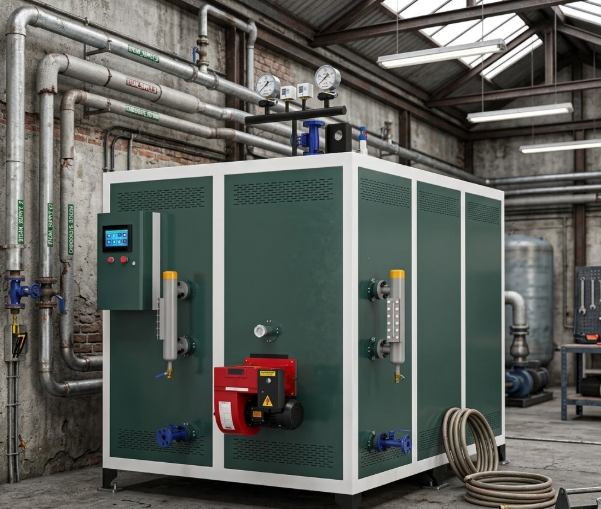
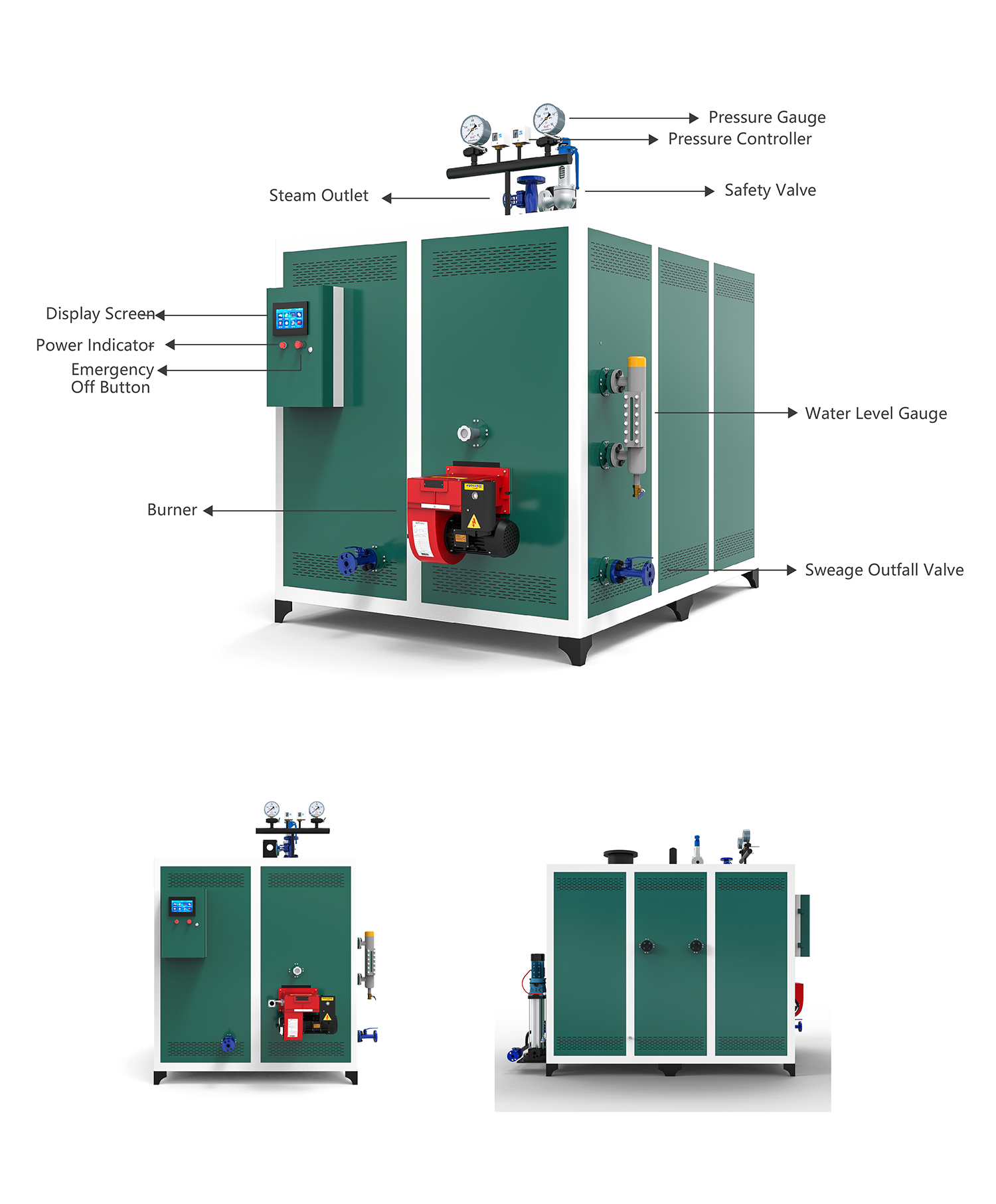
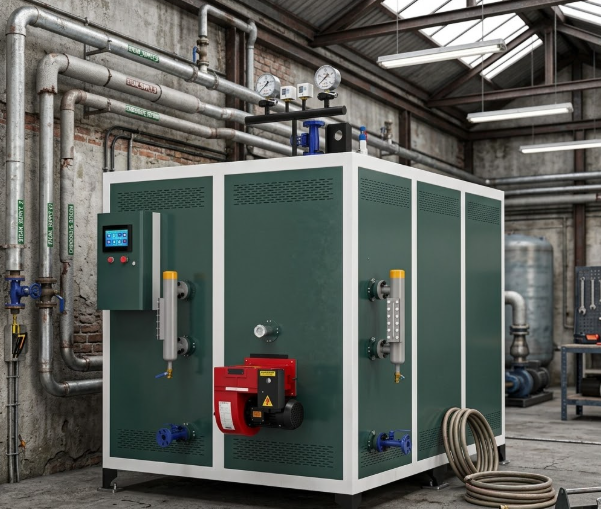
300kg 500kg 1000kg Gas&Oil Steam Boiler/ Gas&Oil Steam Boiler
5. Safety Should Be Evaluated Alongside Efficiency
High-pressure steam equipment always requires careful safety management. A boiler combines pressure, high temperatures, fuel combustion, and water-level control, so a suitable protection system is essential.
Nobeth Group uses multiple levels of protection in its Gas&Oil Steam Boiler.
The control and protection system can monitor conditions such as pressure, temperature, water level, and combustion status. If an abnormal operating condition is detected, corresponding protection functions can stop the system or trigger an alarm.
The system also includes inspection and diagnostic functions intended to identify potential equipment or sensor problems before they develop into more serious failures.
In addition to the manufacturer's own quality checks, Nobeth states that its boilers undergo professional inspection and testing according to applicable requirements.
The company also maintains traceability for individual machines, including documentation related to manufacturing and testing. This can make it easier for industrial users to manage equipment records and demonstrate compliance during inspections.
6. Consider the Complete Cost of Ownership
The purchase price is only one part of the cost of a steam boiler.
For industrial users, ongoing fuel consumption, maintenance, spare parts, downtime, inspections, and equipment service can have a greater impact over several years.
A boiler with better thermal efficiency may have a higher initial cost but reduce fuel consumption during daily operation. Likewise, a strong construction and accessible maintenance design can reduce unexpected downtime.
When comparing gas steam boilers and oil steam boilers, buyers should therefore look at the expected operating hours and fuel costs rather than comparing equipment prices alone.
This approach gives procurement teams a better understanding of the actual long-term value of the equipment.
7. Where Can Gas and Oil Steam Boilers Be Used?
Gas and oil-fired steam boilers can serve a wide range of industrial applications.
Typical users include:
- Pharmaceutical manufacturers
- Food processing plants
- Chemical factories
- Textile manufacturers
- Industrial production facilities
- Steam-dependent processing operations
Different facilities may require different steam capacities and operating configurations. Nobeth's Gas&Oil Steam Boiler product range includes models such as 300 kg, 500 kg, and 1000 kg steam capacity options, allowing buyers to select equipment according to their production requirements.
The actual model should be selected based on steam demand, fuel type, operating pressure, working hours, installation conditions, and other project requirements.
Why Consider Nobeth Group?
Nobeth Group has focused on steam generator research, development, and manufacturing since 1999. The company serves industries including pharmaceuticals, food processing, chemical production, and general manufacturing.
According to the company, its technical development work includes cooperation with institutions such as Tsinghua University, the Chinese Institute of Physical and Chemical Technology, and Huazhong University of Science and Technology. Nobeth has also developed more than 20 related technical patents.
The company holds B-class boiler manufacturing certification and ISO 9001 quality management system registration. Its equipment is supplied to customers in more than 60 countries, supported by a manufacturing and R&D facility covering approximately 90,000 square meters.
For industrial buyers, these capabilities can be useful when evaluating not only the boiler itself but also the manufacturer's production experience and ability to provide long-term support.
What Should Buyers Check Before Ordering?
Before purchasing a Gas&Oil Steam Boiler, it is useful to confirm several basic points:
- Required steam capacity – Make sure the boiler can meet normal and peak production demand.
- Fuel type – Confirm whether the system is designed for the available gas or oil fuel.
- Thermal efficiency – Compare actual efficiency rather than looking only at rated output.
- Heat recovery – Check whether waste heat can be recovered and reused.
- Safety protection – Review pressure, temperature, water-level, and combustion protection.
- Maintenance requirements – Consider accessibility, spare parts, and service support.
- Certifications and testing – Confirm that the equipment meets the requirements of the intended market and application.
- Manufacturer experience – Look at production capability, engineering support, and after-sales service.
Conclusion
Choosing an industrial boiler is a long-term decision. For facilities that depend on continuous steam generation, efficiency, reliability, safety, and maintenance can have a direct effect on production costs.
Nobeth Group's Gas&Oil Steam Boiler combines welded sealing construction, multi-stage heat exchange, waste heat recovery, reduced heat loss, and multi-level safety protection. The company states that the system can achieve more than 95% thermal efficiency and around 5% energy savings compared with conventional boilers of equivalent capacity.
For companies evaluating a new gas steam boiler, oil steam boiler, or replacement for an existing system, these factors are worth considering alongside capacity and purchase price. The right equipment is not simply the boiler with the highest output—it is the system that can provide the required steam efficiently, safely, and consistently throughout its service life.
https://www.nobethsteam.com/maximizing-thermal-efficiency-energy-savings-and-operational-safety.html