Wire drawing is an important step in the production of many products used in everyday life and industrial applications. From automotive components and construction materials to electrical cables and medical devices, many types of wire need to pass through a drawing process before they reach their final size and shape.
One of the key tools used in this process is the tungsten carbide drawing die. Although PCD dies are widely known for their long service life in certain applications, tungsten carbide dies remain a practical choice for many manufacturers because they offer a good balance of wear resistance, strength, flexibility, and cost.
For companies purchasing wire drawing tools, selecting the right die can directly affect wire quality, production stability, maintenance frequency, and overall manufacturing costs.
Hongli Technology has years of experience manufacturing tungsten carbide drawing dies and provides customized solutions for different wire materials and production requirements.
Why Are Tungsten Carbide Drawing Dies Widely Used?
The main reason tungsten carbide is suitable for wire drawing is its combination of hardness and strength.
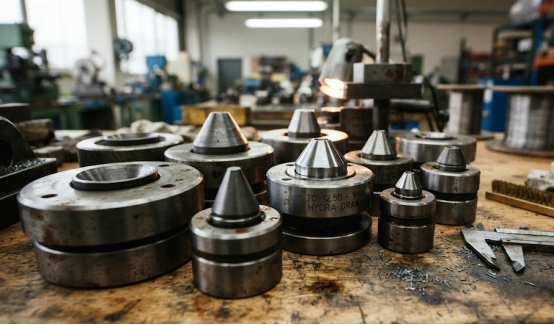
Tungsten carbide is produced by combining hard tungsten carbide particles with a metal binder, commonly cobalt, through a powder metallurgy process. The finished material can withstand high pressure and repeated contact with moving wire while maintaining its shape for long production runs.
For tungsten carbide drawing dies for steel wire, this is particularly useful because steel wire can place considerable mechanical stress on the die during production.
The material composition can also be adjusted according to the application. Fine carbide grains can provide better resistance to wear, while a higher binder content can improve toughness when the die needs to handle heavier loads.
Therefore, die material should not be selected simply according to hardness. The wire material, drawing speed, reduction per pass, wire diameter, and expected production volume should all be considered.
Hongli Technology uses tungsten carbide nibs from qualified suppliers and can select or customize material compositions according to different customer requirements.
Die Geometry Matters as Much as the Material
A good tungsten carbide drawing die is not simply a hard piece of material with a hole through it. The internal profile has a major influence on drawing performance.
Several areas of the die work together during production:
- Bell radius: Helps guide the incoming wire smoothly into the die.
- Approach angle: Controls how the wire is reduced and affects drawing force and wear.
- Bearing land: Helps maintain the required final wire diameter and dimensional accuracy.
- Back relief: Allows the wire to leave the die smoothly and helps reduce surface damage.
If these areas are not manufactured accurately, manufacturers may experience increased friction, poor surface finish, uneven wear, dimensional variation, or even wire breakage.
For this reason, precision grinding and profile control are important when manufacturing industrial drawing dies. Hongli Technology uses CNC grinding and laser profiling equipment to control die geometry and achieve high dimensional accuracy.
Where Are Tungsten Carbide Wire Drawing Dies Used?
The applications of tungsten carbide wire drawing dies cover a wide range of industries. They are especially useful where manufacturers need reliable production performance without the higher cost associated with some premium die materials.
Automotive and Aerospace
Automotive manufacturers use many different types of steel wire for applications such as tire reinforcement, springs, cables, and other mechanical components.
Tungsten carbide dies can help produce these wires with consistent dimensions and surface quality over long production runs.
Aerospace applications can place even higher demands on wire materials. Stainless steel, nickel alloys, and other specialty wires may require carefully controlled drawing processes. The appropriate carbide die can provide the necessary wear resistance and dimensional stability for these applications.
Construction and Infrastructure
High-strength steel wire is widely used in prestressed concrete structures. Bridges, buildings, infrastructure projects, and other large structures depend on wire and tendons with controlled dimensions and reliable mechanical properties.
Tungsten carbide drawing dies for steel wire are suitable for producing high-carbon and other steel wires used in these applications. Maintaining consistent wire diameter is especially important when large quantities of material are produced continuously.
Electrical and Telecommunications
Copper and aluminum wire are widely used in power cables, telecommunications products, motors, and electrical equipment.
Although PCD dies are often selected for extremely fine wire applications, tungsten carbide remains a cost-effective option for many medium-diameter wire products. For high-volume production where a balance between tool life and operating cost is important, carbide dies can be a practical solution.
Medical and Specialty Wire
Medical equipment and specialty products can require stainless steel and other alloy wires with precise dimensions.
Tungsten carbide drawing dies can be used for products such as surgical wire, orthopedic cables, and other specialty components. The final die selection depends on the wire material, required tolerance, surface requirements, and production process.
How to Get Longer Die Service Life
Even a high-quality drawing die can wear quickly if the production process is not properly controlled. Die life depends not only on the carbide material but also on how the die is installed, operated, and maintained.
1. Use the Right Lubrication
Friction between the wire and die generates heat during drawing. Insufficient or unsuitable lubrication can increase friction and accelerate wear.
The lubricant should match the wire material, drawing speed, reduction level, and production conditions. Proper lubrication helps control heat and protects both the wire surface and the die.
2. Re-Polish Before Serious Wear Appears
Small surface defects can gradually become larger wear problems. Waiting until a die develops obvious wear marks may lead to inconsistent wire quality and unnecessary downtime.
Regular inspection and timely re-polishing of the working area and bearing land can help maintain the die's performance and extend its usable life.
3. Check Die Alignment
Correct alignment is another simple but important factor.
If the die and wire are not properly aligned, the load may become uneven. One side of the die can then wear faster than the other, increasing the risk of damage and dimensional problems.
A suitable die holder and accurate setup can help avoid these issues.
4. Control Drawing Parameters
Drawing speed, reduction ratio, and back tension should be kept within suitable ranges.
Trying to achieve too much reduction in a single pass can increase heat and mechanical stress. In multi-pass drawing operations, distributing the reduction properly between dies can help improve both wire quality and die service life.
Why Work With an Experienced Drawing Die Manufacturer?
For industrial buyers, the cheapest drawing die is not always the most economical option. A die with a low purchase price but short service life can increase production interruptions, scrap, replacement costs, and maintenance work.
When choosing a tungsten carbide drawing dies manufacturer, buyers should consider several factors:
- Quality and consistency of tungsten carbide materials
- Manufacturing accuracy
- Customized die geometry
- Surface finish
- Quality inspection procedures
- Production and delivery capacity
- Technical support
- Ability to analyze die wear and wire quality problems
Hongli Technology provides customized drawing die solutions based on wire material, wire size, production conditions, and customer requirements.
The company focuses on material selection, precision die manufacturing, dimensional inspection, and technical support. Its engineers can also assist customers in selecting suitable die profiles and investigating problems such as abnormal wear, wire breakage, and surface defects.
Tungsten Carbide vs. Other Die Materials
Different die materials have different advantages. PCD, natural diamond, and tungsten carbide can all be used in wire drawing, but they are not suitable for exactly the same production conditions.
Tungsten carbide is often selected when manufacturers need a combination of durability, versatility, and reasonable tooling costs. PCD can provide longer service life in some high-volume or fine-wire applications, but the higher initial investment may not always be necessary.
The right choice depends on the complete production situation rather than simply choosing the hardest available material.
Conclusion
The performance of a drawing die can have a direct effect on wire quality and production efficiency. For manufacturers working with steel, copper, aluminum, stainless steel, and specialty alloys, tungsten carbide drawing dies continue to be a dependable option for many industrial applications.
Material selection, die geometry, alignment, lubrication, drawing parameters, and regular maintenance all contribute to the final result. A suitable die should therefore be selected according to the actual production process rather than based on price or hardness alone.
With experience in tungsten carbide material selection, precision manufacturing, customized die geometry, and technical support, Hongli Technology provides tungsten carbide wire drawing dies for different wire drawing applications.
For manufacturers looking for stable performance and reasonable tooling costs, choosing the right tungsten carbide drawing die can be a practical way to improve production consistency and control long-term operating expenses.