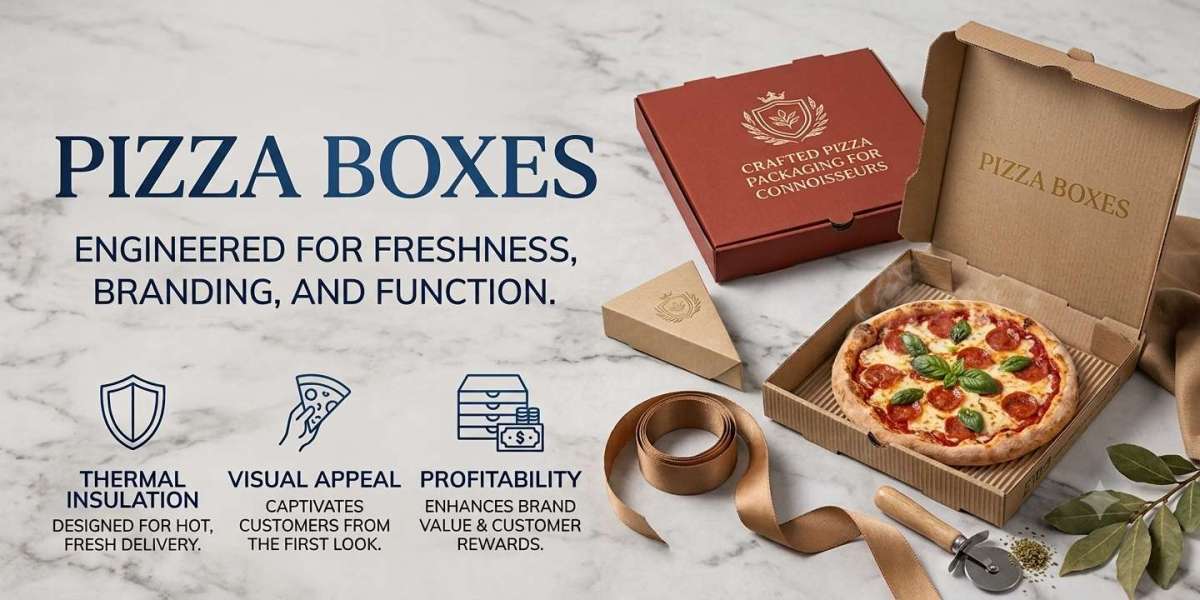
For modern restaurant owners, a pizza box is no longer just a cardboard container used to transport food from the oven to the customer’s doorstep. Today, the foodservice industry is highly competitive, and delivery has become a primary revenue driver. Because of this shift, pizzeria owners expect their packaging to perform at a much higher level.
A high-performance pizza box must protect the food, maintain its quality, support brand identity, and remain cost-effective. Here is a detailed look at what restaurant owners look for in their pizza packaging today and why choosing the right custom packaging partner matters.
1. Temperature Retention and Moisture Control
The ultimate test of any pizza box is how the food looks and tastes when it arrives at the customer’s home. Pizza is a challenging food to deliver because it releases steam as it cools.
- The Soggy Crust Problem: If a box does not have proper ventilation, steam gets trapped inside. As a result of this moisture's return to the pizza, the cheese becomes gelatinous and the crusty crust becomes soggy.
- Heat Retention: While venting steam is necessary, the box must also retain heat. Customers expect their pizza to arrive hot, not lukewarm.
To satisfy these two requirements, restaurant operators want high-performance boxes composed of thick, insulating corrugated cardboard. Properly placed ventilation tabs allow steam to escape without letting too much heat drift out.
2. Structural Strength and Stackability
During peak hours, delivery drivers often stack multiple large orders on top of one another in insulated delivery bags or on car seats.
A weak box will bow, sag, or collapse under pressure. When the top of a box collapses, it touches the hot cheese and toppings, ruining the presentation and leaving the customer disappointed. Typically manufactured from B-flute or E-flute corrugated paperboard, top-quality pizza boxes should have robust, rigid folds to be able to endure mounting.
Additionally, the front locks and side flaps must fit together securely. If a box pops open during transport, the food cools down instantly and risks contamination.
3. Grease Resistance and Food Safety
Pizza is naturally oily, especially when loaded with cheese, pepperoni, and traditional sauces. Standard cardboard can quickly absorb grease, leading to unsightly dark spots on the bottom and sides of the packaging.
- The Impression: A grease-soaked box looks unappealing and can leave oil stains on a customer’s table, carpet, or car seat.
- The Solution: Restaurant owners expect boxes with a grease-resistant barrier or high-quality liner board. This ensures the box remains dry, sturdy, and clean to the touch throughout the delivery journey.
- Food-Grade Materials: Above all, the packaging must be manufactured using 100% food-safe, FDA-approved materials. The heat from the pizza should never release harmful chemicals or strange paper odors into the food.
4. Operational Efficiency in the Kitchen
A busy kitchen moves fast. During Friday night rushes, kitchen staff do not have time to struggle with complicated folding patterns.
Restaurant owners prefer pizza boxes that are easy to store flat and quick to assemble. Self-locking designs that snap into shape in seconds help keep the assembly line moving smoothly.
Additionally, the boxes must stack neatly near the prep station without sliding around, allowing workers to grab them quickly, pack the food, and hand it over to the delivery team without delay.
5. Brand Representation and Customization
In the US food industry, branding is everything. A plain brown kraft box is a missed marketing opportunity. When a delivery driver walks to a customer’s door, everyone on the street sees the packaging. Once inside, the box sits on the dining table, acting as a billboard for the restaurant.
Today’s business owners look for custom packaging suppliers that offer high-quality printing capabilities. Whatever it is, a simple rustic design printed on brown kraft paper or a colorful, brilliant brand on bleached white clay-coated board, the print needs to be sharp and clear.
Using water-based, eco-friendly inks is also a major plus, as it aligns with the modern consumer's preference for sustainable business practices.
6. Environmental Sustainability
Consumers in the United States are increasingly conscious of their environmental footprint. They prefer ordering from restaurants that show a commitment to green practices.
Because of this, restaurant owners actively seek pizza boxes made from recycled content that are also fully recyclable or compostable. High-performance packaging must meet these environmental standards without sacrificing its strength, heat retention, or grease resistance. Offering a box that customers can easily toss into their recycling bin builds long-term brand loyalty.
Choosing the Right Packaging Partner
Meeting all these expectations requires a reliable supply chain and high-quality manufacturing. Restaurant owners cannot afford supply shortages or inconsistent box quality that leads to damaged food.
Partnering with an experienced custom packaging provider ensures that businesses receive durable, well-designed, and brand-aligned pizza boxes consistently. In the event that you require ordinary corrugated boxes for daily deliveries or premium rigid boxes for high-end gourmet gift packages, the proper partner will assist you in designing unique sizes, selecting the suitable material thickness, and delivering a product that maintains the food's freshness while also satisfying the clients.
Conclusion
A high-performance pizza box is an essential business tool. It acts as an extension of the kitchen, ensuring that the hard work of the chefs translates perfectly to the customer’s dining room table. By focusing on temperature control, structural integrity, quick assembly, and custom branding, restaurant owners can protect their food, delight their customers, and grow their brand value with every single delivery.
For more Information: https://ibexpackaging.com/pizza-boxes/