For manufacturers of textiles, nonwoven materials, and paper packaging, material strength is an important factor in product quality and reliability. Fabrics used in clothing must withstand everyday stress, nonwoven materials need to maintain their integrity during use, and packaging paper must resist pressure during handling and transportation.
Visual inspection alone cannot determine how much pressure a material can withstand before failure. Manufacturers therefore rely on laboratory testing equipment to measure material performance and identify potential weaknesses before products enter the market.
A digital bursting strength tester provides a practical way to evaluate the resistance of flexible materials to pressure applied over a defined area. For quality control laboratories, textile manufacturers, paper producers, and research institutions, this type of testing equipment can support material comparison, production monitoring, and product development.
Ningbo Textile offers textile and material testing equipment for industrial quality inspection applications. Understanding how a digital bursting strength tester works can help buyers determine whether it is suitable for their testing requirements.
1. How Does a Digital Bursting Strength Tester Work?
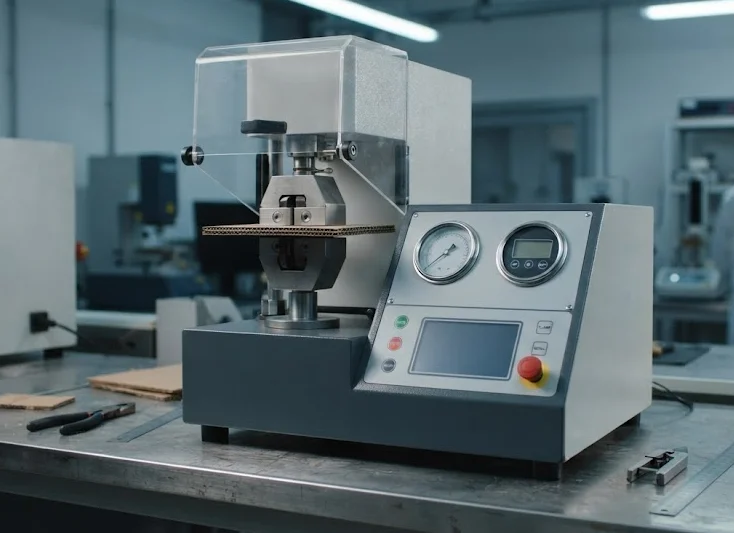
Bursting strength testing measures the pressure required to rupture a specimen when pressure is applied through a diaphragm over a defined test area. Depending on the instrument design, the pressure may be generated hydraulically or pneumatically.
During a typical test, the specimen is secured between clamping components. Pressure is then applied beneath the material until the specimen bursts. The instrument records the maximum pressure reached during the test, providing a quantitative measure of the material's resistance to bursting.
Some testing systems can also measure bursting height, which describes the diaphragm displacement or specimen distension at the point of rupture. This additional measurement can help users understand how a material deforms before failure.
The two measurements provide different types of information:
- Bursting strength: Indicates the maximum pressure a specimen withstands before rupture, commonly expressed in kPa or other specified pressure units.
- Bursting height: Indicates the extent of deformation at the bursting point, where supported by the instrument's measurement configuration.
For laboratories testing different materials, digital measurement and automatic data processing can reduce manual recording work and help improve the consistency of test procedures.
The appropriate testing method, clamping arrangement, pressure medium, and reporting units should always be selected according to the material and applicable test standard.
2. Applications Across Textiles, Nonwovens, and Paper
A digital bursting strength tester can be useful in several industries where materials must withstand pressure or localized deformation.
Textile and Apparel Manufacturing
Knitted fabrics, stretch materials, and certain woven textiles may experience pressure during wearing, processing, and everyday use. Bursting strength testing helps manufacturers assess fabric resistance to rupture and compare the performance of different materials.
The results can support fabric development, incoming material inspection, and quality checks during production.
Nonwoven Materials
Nonwoven fabrics are widely used in hygiene products, medical-related materials, filtration, and industrial applications. Depending on their structure and intended use, these materials may require testing to verify their mechanical integrity.
Bursting strength measurements can help manufacturers compare material formulations and production batches. Other tests may still be necessary to assess properties such as filtration performance, tensile strength, or liquid resistance.
Paper and Corrugated Packaging
Paper strength is an important consideration in packaging applications where materials face handling pressure, stacking loads, and transportation stress.
A paper bursting strength tester helps evaluate the pressure required to rupture paper specimens under defined conditions. This information can support raw material selection, production quality control, and comparisons between paper grades.
Bursting strength is not the same as stacking strength or edge crush resistance, so packaging manufacturers should select the appropriate test method for the performance characteristic they need to evaluate.
Leather and Other Flexible Sheet Materials
Certain leather and flexible composite materials may also be evaluated using bursting or related mechanical tests when the method is suitable for their structure.
For applications such as footwear, upholstery, and specialty sheet manufacturing, the testing method should be chosen according to the material's characteristics and the relevant product requirements.
3. What Features Should Buyers Evaluate?
When selecting a fabric bursting strength testing machine, buyers should focus on measurement performance, specimen handling, operating convenience, and compatibility with their quality control procedures.
Measurement Accuracy and Repeatability
Reliable results depend on more than the digital display. Pressure measurement, calibration, specimen preparation, clamping conditions, and testing procedures all influence the final result.
Buyers should review the instrument's specified measurement range, accuracy, resolution, and calibration requirements. Repeatability should also be considered, particularly when the equipment will be used for routine production inspection or comparative research.
Where a particular accuracy level is required, it should be confirmed through the manufacturer's technical documentation and relevant verification records.
Consistent Specimen Clamping
The specimen must remain securely positioned during testing. Insufficient clamping may cause slippage, while unsuitable clamping conditions can damage the material or affect the test result.
A suitable clamping mechanism helps maintain stable specimen positioning and supports consistent testing across multiple samples.
When comparing instruments, buyers should check the clamping range, specimen dimensions, operating method, and compatibility with the materials they intend to test.
Digital Controls and Data Management
Digital controls can simplify test setup, measurement, and result recording. Depending on the equipment configuration, the system may display pressure readings, store test results, calculate statistical values, or generate test reports.
For laboratories handling large sample volumes, these functions can reduce repetitive manual work and make it easier to compare results across production batches.
If USB export, specialized software, or laboratory information management system (LIMS) integration is required, confirm that the specific instrument supports the relevant functions. These capabilities should not be assumed to be standard across all digital bursting testers.
Safety and Routine Maintenance
Bursting strength instruments apply pressure during testing, so appropriate operating safeguards and maintenance procedures are important.
Buyers should review the equipment's protective enclosure, operating instructions, pressure-system maintenance requirements, and procedures for replacing or inspecting consumable components such as diaphragms.
Regular calibration and maintenance help laboratories maintain dependable measurements and reduce avoidable interruptions.
4. Understanding Testing Standards and Compliance
International and national standards provide defined procedures for evaluating material properties. However, the applicable standard depends on the specimen type, equipment design, and intended test.
Examples include ISO 2758 for paper bursting strength, ISO 2759 for board bursting strength, and ASTM D3786 for the bursting strength of textile fabrics using a diaphragm bursting tester method.
Although these standards address related testing principles, they are not interchangeable in every application. Buyers should verify the current applicable edition, specimen requirements, test conditions, and instrument compatibility before purchasing equipment.
A testing machine's ability to perform a particular standard should be confirmed through its technical specifications and supporting documentation.
For laboratories supplying customers in multiple markets, choosing the correct test method helps ensure that reported results are relevant to the product specification and customer requirements.
5. How Bursting Strength Testing Supports Production Efficiency
Laboratory testing is not limited to checking finished products. When integrated into a broader quality management process, bursting strength measurements can help manufacturers identify material variations and investigate production problems.
For example, a textile producer can compare fabric batches to determine whether changes in raw materials or processing conditions affect bursting performance. A paper manufacturer can monitor differences between grades or production runs. Nonwoven producers can use test results to compare material structures and support product development.
These measurements can also assist supplier evaluation. Buyers can establish consistent inspection procedures and compare incoming materials against agreed specifications rather than relying exclusively on supplier declarations.
However, bursting strength is only one aspect of material performance. A comprehensive quality assessment may also require tensile, tear, abrasion, thickness, or other application-specific tests.
6. Considering Ningbo Textile for Testing Equipment
Ningbo Textile provides textile and clothing testing equipment for laboratories and manufacturers that need to evaluate material properties.
When considering a digital bursting strength tester from Ningbo Textile, buyers should confirm the intended sample types, measurement range, applicable standards, clamping configuration, and available data-processing functions.
It is also useful to discuss calibration requirements, technical support, operator training, and maintenance arrangements before purchasing. Providing information about the materials being tested and the laboratory's existing procedures can help establish whether the proposed instrument meets the application's needs.
For businesses developing a new quality control process, selecting equipment based on clearly defined testing requirements can help avoid unnecessary features and improve day-to-day laboratory efficiency.
Conclusion
A digital bursting strength tester helps manufacturers evaluate how textiles, nonwoven materials, paper, and other suitable flexible substrates respond to pressure before rupture. By providing measurable test results, the equipment supports material comparison, production inspection, and quality management.
When selecting a testing instrument, buyers should consider measurement accuracy, repeatability, specimen clamping, data handling, maintenance, and compatibility with the applicable test standards.
Ningbo Textile offers testing equipment for material inspection applications. By matching the instrument's verified capabilities to specific laboratory requirements, manufacturers can establish a more consistent approach to material testing and make better-informed quality control decisions.
https://www.nbfyti.com/digital-bursting-strength-testing-explained.html