Industrial facilities often operate equipment that generates significant heat, from pipelines and valves to welding stations, exhaust systems, and processing machinery. Protecting workers and surrounding equipment requires materials suited to the actual operating environment. Selecting a fire insulation blanket involves more than checking its maximum temperature rating; buyers also need to consider heat exposure, material durability, installation requirements, and maintenance needs.
For industrial procurement teams, evaluating these factors before purchasing can help prevent premature material failure, reduce replacement frequency, and support more effective thermal protection.
1. Match the Blanket Material to the Working Environment
Industrial fire insulation blankets are commonly manufactured from fiberglass fabrics combined with different coatings. The base fabric provides the structural foundation, while the coating can influence flexibility, surface protection, and resistance to environmental factors.
Different materials serve different purposes:
- Silicone-coated fiberglass: Offers flexibility and heat resistance for applications that require a protective coated surface.
- PU-coated fiberglass: Can provide resistance to abrasion, oil, solvents, and certain chemicals, depending on the specific coating formulation.
- Vermiculite-coated fiberglass: Designed for demanding high-temperature applications. Zhuowei lists temperature resistance of up to 1000°C for this material; buyers should confirm the applicable operating conditions for the selected product.
- PTFE-coated fiberglass: Suitable for applications where chemical resistance and surface properties are important.
- Acrylic-coated fiberglass: Provides a coated fabric option for applications with specific handling and surface-protection requirements.
- Aluminum foil laminated fiberglass: Can help reflect radiant heat when appropriately designed and installed for the intended application.
These materials are not interchangeable in every situation. A blanket suitable for welding protection may not be the best option for continuous insulation around industrial piping. Buyers should identify the primary heat source, potential chemical exposure, and mechanical conditions before selecting a product.
2. Evaluate More Than Maximum Temperature Resistance
Temperature ratings are an important starting point, but they do not fully describe how a fire insulation blanket will perform in service.
Before selecting a high temperature fire insulation blanket, assess the following conditions:
- Continuous operating temperature and short-term temperature peaks
- Exposure to direct flames, radiant heat, or hot surfaces
- Contact with welding sparks or molten metal
- Exposure to oil, moisture, and process chemicals
- Abrasion, vibration, and repeated mechanical movement
- Available installation space and fastening requirements
- Frequency of inspection, removal, and reinstallation
For example, a welding blanket may need to resist sparks and hot particles, while a removable insulation cover for a valve may need to maintain its shape, fit securely, and allow convenient maintenance access.
An experienced fire insulation blanket manufacturer should therefore consider the complete application rather than recommending a product based on a single temperature figure. Buyers should also verify the manufacturer's test conditions and distinguish between continuous-use ratings and short-duration exposure limits.
3. Understand the Difference Between Fire Blankets and Insulation Blankets
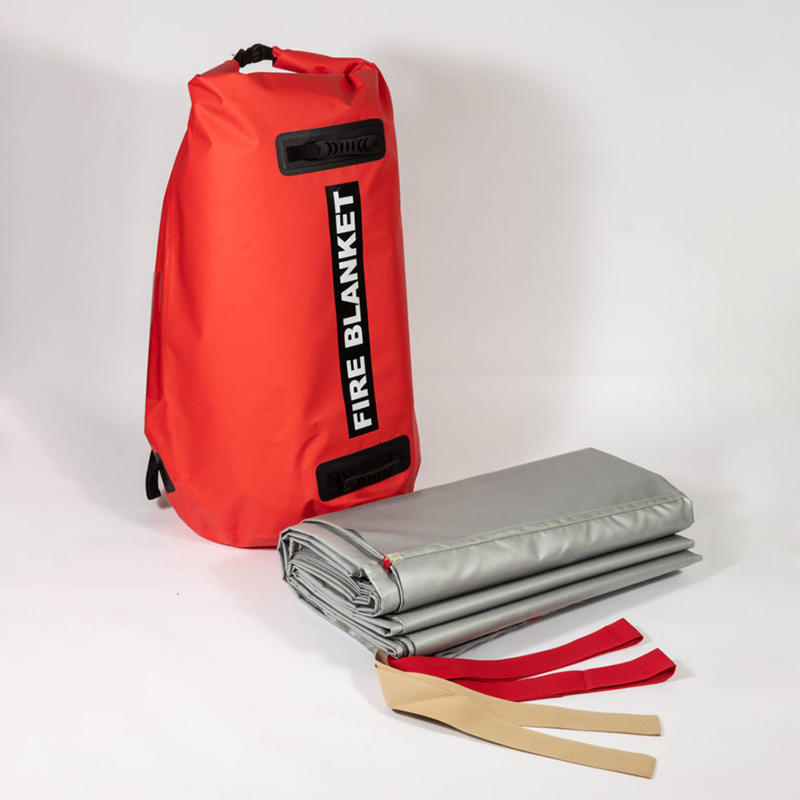
The phrase “fire blanket” can describe products designed for different purposes. An emergency fire blanket is generally intended for specific fire-suppression situations, whereas an industrial fire insulation blanket may be used for heat shielding, thermal insulation, equipment protection, or reducing personnel exposure to hot surfaces.
These products should not be treated as equivalent.
For industrial projects, define the intended function before placing an order. If the objective is continuous thermal insulation, relevant considerations may include insulation performance, dimensional stability, fastening design, durability, and access for maintenance.
Where personnel protection or fire containment is required, confirm that the selected product meets the applicable safety requirements for that specific use. A generic temperature rating alone does not establish suitability for every fire-protection application.
4. Where Are Industrial Fire Insulation Blankets Used?
A fire insulation blanket can support different protection requirements across industrial sectors.
Welding and metal fabrication: Welding blankets can help protect nearby equipment and surfaces from sparks and radiant heat during fabrication work. Material selection should reflect the type of welding process and the expected exposure.
Oil and gas facilities: Flexible insulation products may be installed around pipes, valves, flanges, and other components where rigid insulation is difficult to fit or remove.
Machinery and exhaust systems: High-temperature blankets can be used for selected equipment protection and thermal management applications, subject to the product's specifications.
Industrial pipelines and processing equipment: Insulation covers can help address heat exposure while allowing access to components that require regular inspection or servicing.
Zhuowei offers a range of related products, including fire blankets, welding blankets, smoke containment curtains, removable insulation jackets, and coated fiberglass materials. For equipment that requires frequent maintenance, a removable insulation blanket can offer practical advantages because it can be taken off and reinstalled without reconstructing permanent insulation.
5. Why Custom-Made Fire Insulation Blankets Can Be More Practical
Industrial equipment varies widely in size and shape. Straight pipes, irregular valves, flanges, and complex machinery may require different dimensions and fastening arrangements. A standard blanket may leave gaps, interfere with equipment access, or be difficult to secure properly.
Working with a custom fire insulation blanket manufacturer allows buyers to discuss dimensions, thickness, fabric width, coating type, edge treatment, openings, and fastening methods according to the installation requirements.
Zhuowei provides customized coated fiberglass solutions with options for coating weight, color, thickness, and width. These options can help industrial buyers identify a suitable material configuration for their specific thermal protection needs.
Before confirming a custom order, provide equipment measurements, operating conditions, installation photographs or drawings where available, and details about required removal and maintenance procedures. Clear specifications can reduce fitting problems and avoid unnecessary adjustments after delivery.
6. Choosing Zhuowei as an Industrial Supplier
Zhuowei specializes in coated fiberglass fabrics and related high-temperature products. According to company information, Suqian Zhuowei New Materials Co., Ltd. has nearly 20 years of industry experience and 15 years of established production expertise. The company also reports SGS certification and customers in more than 30 countries across sectors such as oil and gas, shipbuilding, construction, and industrial safety.
For buyers seeking a fire insulation blanket supplier, experience with coated fiberglass materials and the ability to customize product specifications can be useful when standard products do not meet installation requirements.
During supplier evaluation, buyers should request the technical data for the exact product, confirm its temperature limits and chemical compatibility, and check any relevant test reports or certification documents. Installation guidance, lead times, sample availability, and ongoing supply capacity are also worth discussing before committing to a large order.
Conclusion
Selecting the right fire insulation blanket requires a practical assessment of temperature exposure, material properties, installation conditions, and long-term service requirements. The highest temperature rating does not automatically make a product the best choice for every application.
For industrial buyers, matching the coating and fiberglass construction to the working environment, confirming technical specifications, and considering custom dimensions can help improve product suitability. Zhuowei's coated fiberglass product range provides options for evaluating fire protection, heat shielding, and industrial insulation requirements.
http://www.sqzwxc.com/fire-insulation-blanket-manufacturer-a-complete-buyer-s-guide.html