Energy efficiency has become a major concern for industrial manufacturers. Rising energy costs, pressure to reduce emissions, and the need to improve production efficiency are encouraging businesses to look for better ways to use the resources already available in their facilities.
In industries such as steelmaking, metallurgy, cement production, chemical processing, power generation, and waste treatment, large quantities of heat can be carried away by exhaust gases. When this heat is released without recovery, a potentially valuable energy resource is lost.
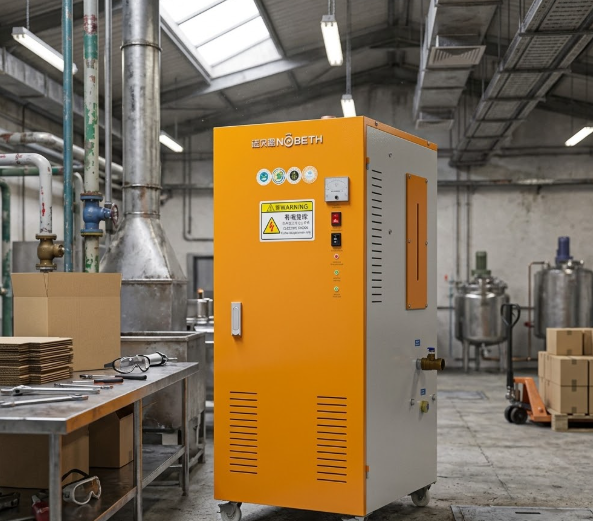
A custom waste heat boiler helps address this challenge by recovering heat from industrial exhaust streams and using it to generate steam or provide useful thermal energy. Unlike conventional fuel-fired boilers, which generate heat through combustion, waste heat boilers are designed around the characteristics of an existing heat source.
Hailu Heavy Industry provides customized industrial boiler solutions for different operating environments. By considering exhaust gas conditions, plant layout, and production requirements, a properly engineered waste heat recovery boiler can help businesses improve energy utilization and make better use of available thermal resources.
1. Why Do Industrial Waste Heat Boilers Require Custom Design?
Industrial exhaust gases vary considerably from one process to another. Their temperatures, flow rates, chemical compositions, and particulate concentrations can affect both heat recovery performance and equipment service life.
A boiler designed for one application may not perform effectively under different operating conditions. Custom engineering allows the heat recovery system to be matched to the actual process rather than relying on a standard configuration.
Several factors deserve particular attention during the design stage.
Managing Dust Accumulation and Fouling
Exhaust gases from cement kilns, metal smelting operations, and waste incineration facilities may contain substantial amounts of dust and other particles. As these materials accumulate on heat transfer surfaces, they can restrict gas flow and reduce heat transfer efficiency.
Depending on the application, engineers may consider tube arrangements that accommodate the expected dust load, along with suitable cleaning systems such as soot blowers or mechanical rapping devices.
The objective is to maintain practical heat transfer performance while limiting maintenance requirements and the risk of unplanned shutdowns. The most suitable arrangement depends on particle characteristics, gas velocity, temperature, and the properties of the recovered material.
Selecting Materials for Harsh Operating Conditions
Waste heat boilers may encounter high temperatures, corrosive compounds, thermal cycling, and changing operating loads. These conditions can place considerable stress on pressure-bearing components and heat exchange surfaces.
Material selection should therefore reflect the actual service environment. Carbon steel may be appropriate for some operating conditions, while stainless steel, chrome-moly alloy steel, or other specialized alloys may be considered where higher temperature or corrosion resistance is required.
There is no single material that suits every waste heat recovery project. Engineers need to assess gas composition, operating temperature, pressure, potential acid dew-point corrosion, and expected thermal cycling before finalizing the material specification.
A well-matched material selection can help balance initial investment, equipment reliability, and long-term maintenance costs.
2. Key Engineering Factors When Choosing a Custom Waste Heat Boiler
Selecting a waste heat boiler involves more than estimating how much steam a plant needs. The system must recover energy without negatively affecting the primary industrial process.
Gas-Side Pressure Drop
Installing a waste heat boiler introduces resistance into the exhaust gas path. If the pressure drop is excessive, it may interfere with the operation of upstream furnaces, kilns, or other process equipment. Additional fan power may also be required to maintain the necessary gas flow.
During system design, engineers should evaluate the available draft pressure, gas flow rate, equipment arrangement, and allowable back pressure. Computational Fluid Dynamics (CFD) analysis may be useful for examining gas distribution and optimizing flow paths in complex installations.
The aim is to achieve effective heat recovery while keeping gas-side resistance within the limits of the existing process.
Thermal Stress and Changing Operating Loads
Not every industrial process operates continuously at a stable load. Batch production, equipment startup and shutdown, and fluctuations in production demand can cause rapid changes in exhaust gas temperature.
Repeated temperature changes may create differential expansion and thermal stress in boiler components. If these stresses are not adequately considered, they can contribute to fatigue, deformation, or cracking over time.
A custom waste heat boiler should account for the expected operating cycle. Depending on the design, features such as appropriate expansion allowances, flexible support arrangements, and carefully engineered connections can help accommodate thermal movement.
Understanding the real operating profile is therefore essential before equipment specifications are finalized.
Space Limitations and Plant Integration
Many waste heat recovery projects involve existing industrial facilities rather than new construction. Available installation space may be restricted by existing production equipment, buildings, pipelines, and maintenance access requirements.
Custom manufacturing allows the boiler arrangement to be adapted to site conditions. Vertical or horizontal configurations may be considered according to the available footprint, exhaust duct routing, maintenance access, and required heat transfer area.
Early coordination between the boiler supplier and the plant engineering team can help identify installation constraints before fabrication begins. This can reduce the likelihood of costly modifications during installation.
3. How Waste Heat Recovery Can Improve Industrial Energy Utilization
The value of a waste heat boiler depends on how effectively recovered energy can be used within the facility.
One common application is steam generation. The recovered heat can produce steam for suitable industrial processes or for other plant requirements, depending on steam pressure, temperature, and quality specifications.
In some facilities, recovered thermal energy can also support other heating duties. The appropriate solution depends on the temperature level of the available heat source and the energy demand elsewhere in the production system.
When evaluating a waste heat recovery project, businesses should consider several factors:
- Available waste heat: Exhaust temperature, gas flow rate, and operating hours influence the amount of energy that can potentially be recovered.
- Usable energy demand: Recovered steam or heat delivers the greatest practical value when it can be consumed reliably by the facility.
- Operating stability: Variations in production output can affect the consistency of heat supply and the performance of the recovery system.
- Maintenance requirements: Dust removal, corrosion control, inspections, and cleaning need to be included in lifecycle cost estimates.
- System integration: The boiler must operate compatibly with the existing exhaust gas path and downstream energy utilization equipment.
A realistic assessment of these factors helps determine whether a proposed project can deliver meaningful energy savings. Actual results will depend on site conditions, equipment design, and how consistently the recovered energy is used.
4. What Should Buyers Discuss with a Waste Heat Boiler Manufacturer?
Before requesting a quotation, project owners should prepare as much information as possible about the heat source and the intended application. Accurate operating data allows the manufacturer to develop a design that better reflects the plant's requirements.
Important information includes:
- Exhaust gas temperature under normal and peak operating conditions
- Gas flow rate, composition, and particulate loading
- Existing system pressure and allowable gas-side pressure drop
- Required steam capacity, pressure, and temperature
- Daily operating hours and expected load fluctuations
- Available installation space and maintenance access
- Applicable safety, environmental, and project standards
Buyers should also discuss cleaning methods, inspection access, material selection, and expected maintenance intervals. These details can be just as important as the initial thermal performance calculations when assessing the long-term suitability of the equipment.
Working with an experienced industrial boiler manufacturer helps bring these considerations together during the design and procurement stages.
5. Customized Waste Heat Recovery Solutions from Hailu Heavy Industry
Each industrial plant has its own heat source characteristics, production schedule, and energy requirements. For this reason, waste heat recovery equipment should be selected according to the specific application rather than solely by nominal capacity.
Hailu Heavy Industry provides customized waste heat boiler solutions intended to support different industrial operating conditions. Project-specific engineering can consider exhaust gas characteristics, heat recovery requirements, material selection, system layout, and integration with existing production equipment.
For facilities exploring waste heat recovery, the first step is to establish a clear understanding of the available heat source and how recovered energy could be used. With these details defined, the equipment configuration can be evaluated against operational requirements, maintenance considerations, and long-term project economics.
Conclusion
A custom waste heat boiler can help industrial facilities recover useful energy from exhaust gases that would otherwise be released into the environment. However, successful heat recovery requires more than maximizing heat transfer. Dust accumulation, corrosion, gas-side pressure drop, thermal stress, and installation constraints must all be addressed during the engineering process.
By matching the boiler design to actual site conditions, businesses can improve the practical utilization of waste heat while supporting more efficient industrial operations.
Hailu Heavy Industry offers customized waste heat recovery boiler solutions for industrial applications. Careful project assessment and appropriate equipment design can help manufacturers determine how best to integrate recovered thermal energy into their existing production systems.