Liquid filtration is an important part of many industrial operations. In chemical production, wastewater treatment, food processing, and other manufacturing environments, unwanted particles can affect product consistency, restrict fluid flow, and accelerate wear on downstream equipment. If filtration is not properly managed, these problems may lead to additional maintenance, production delays, and higher operating costs.
An industrial bag filter provides a practical solution for removing suspended solids from process liquids. Its relatively simple structure, flexible filter media options, and range of available capacities make it suitable for applications with different flow rates and contamination levels.
Rucca supplies industrial filtration equipment designed for varied process requirements. When selecting a bag filter system, understanding the operating conditions, filter configuration, and maintenance requirements can help businesses achieve more reliable filtration performance.
1. How Does an Industrial Bag Filter Work?
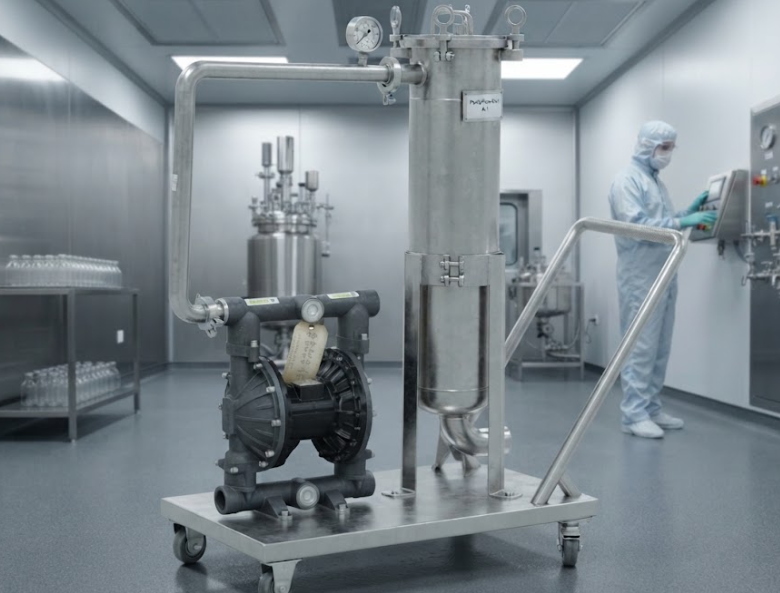
A bag filter typically consists of a pressure housing, a filter bag, an internal support basket, and sealing components. During operation, liquid enters the housing and passes through the filter bag. Suspended particles are retained by the filtration medium, while the filtered liquid flows toward the outlet.
Compared with some cartridge-based filtration arrangements, bag filters can offer convenient media replacement and practical handling of relatively high solid loads. Their suitability depends on the fluid characteristics, required filtration level, and selected filter bag.
For industrial users, several design considerations are particularly important:
- Convenient filter bag replacement: A suitable housing cover and closure mechanism can simplify routine maintenance and reduce the time needed for bag changes.
- Effective fluid distribution: Appropriate inlet and internal flow design helps distribute liquid through the filter media and reduces uneven loading.
- Reliable housing construction: Materials such as stainless steel 304 or 316L may be suitable for certain applications, depending on the fluid's chemical composition, temperature, and operating pressure.
Standardized connections and replaceable filter bags can also make it easier to integrate filtration equipment into existing process lines. However, dimensional compatibility and pressure ratings should always be verified before installation.
2. Single-Bag or Multi-Bag Filter: Which Is More Suitable?
The right industrial bag filter depends on more than the required flow rate. Engineers should also consider operating schedules, particle concentration, liquid viscosity, available installation space, and how often the system can be taken offline for maintenance.
Single-Bag Filter Systems
A single-bag filter is often suitable for small-to-medium flow requirements, batch production, and auxiliary filtration loops. Its relatively straightforward construction makes it convenient to operate and maintain.
Typical considerations include:
- Lower initial equipment investment for smaller applications
- Straightforward access when replacing filter bags
- Suitability for intermittent processes or moderate filtration loads
- A need to stop or isolate the unit during routine bag replacement
For facilities with limited flow requirements, a single-bag filter may provide an economical way to manage liquid cleanliness without introducing unnecessary system complexity.
Multi-Bag Filter Systems
For larger production lines, a multi-bag filter can accommodate several filter bags within one housing. Increasing the number of bags provides more total filtration area and can help support higher flow rates, depending on the process conditions and selected media.
Rucca offers multi-bag configurations with options ranging from 1 to 40 bags, allowing users to evaluate different capacities for their applications.
Multi-bag systems may be appropriate for continuous manufacturing, chemical processing, and other operations where filtration demand is relatively high. Their performance depends on factors such as bag specifications, liquid viscosity, solids loading, and the allowable pressure drop.
It is also important to distinguish between higher filtration capacity and uninterrupted operation. A conventional multi-bag housing may still require the process to be isolated when the bags need replacement. Where continuous filtration is essential, the complete system design must account for maintenance and changeover requirements.
3. Important Factors That Affect Filtration Performance
Selecting a filter solely by housing size or nominal flow capacity can result in unsatisfactory performance. The filtration medium and operating conditions must match the actual process.
Filter micron rating
Filter bags are available in different nominal or absolute micron ratings, depending on the media and product design. The appropriate rating depends on the particle size that needs to be removed and the required downstream fluid quality.
A finer filter is not automatically the best choice. It may increase resistance to flow and require more frequent replacement when the liquid contains a high concentration of solids. Users should confirm the manufacturer's filtration-rating definitions and retention data before choosing a bag.
Dirt-holding capacity
The amount of solids a filter bag can retain before replacement depends on its construction, the type and concentration of particles, and the operating conditions. Selecting suitable media can help balance service life, pressure drop, and filtration requirements.
Chemical and temperature compatibility
Filter bag materials, housing metals, and sealing components must withstand the process fluid. O-ring options may include materials such as EPDM, FKM (often referred to by the trade name Viton), or PTFE-based solutions, but compatibility varies with the specific chemical, concentration, and temperature.
Sealing performance
A properly fitted filter bag and compatible sealing arrangement help reduce the risk of unfiltered liquid bypassing the filtration medium. During equipment selection, users should confirm the bag dimensions, seating arrangement, and compatibility with the intended housing.
These factors should be evaluated together rather than treated as independent specifications.
4. Maintenance Practices for Longer Service Life
Even a well-selected bag filter requires routine monitoring. Maintenance practices influence filtration consistency, equipment reliability, and overall operating costs.
Monitor Differential Pressure
The pressure difference between the inlet and outlet provides a useful indication of filter loading. As retained particles accumulate, the differential pressure may increase. Operators should follow the equipment and filter-bag manufacturer's recommended replacement limits rather than waiting for severe flow restriction.
Replacing bags at the appropriate time helps maintain process conditions and reduces the risk of excessive pressure loading.
Follow Correct Startup Procedures
Before putting a housing into service, operators should follow the specified filling, venting, and startup procedures. Where the design requires it, trapped air should be released safely before the system reaches normal operating conditions.
Correct startup helps establish stable flow and reduces avoidable stress on the filtration assembly.
Inspect Bags, Seals, and Support Baskets
Filter bags must be installed correctly and checked for damage. The support basket should also be inspected for deformation, corrosion, or wear that could affect bag support.
Seals should be examined for deterioration and replaced when necessary. The housing should be depressurized and isolated according to the manufacturer's safety instructions before opening it for maintenance.
Establish a Practical Maintenance Schedule
Inspection frequency should reflect the process fluid, solids concentration, operating hours, and historical pressure-drop trends. Recording bag replacement intervals and differential pressure readings can help teams identify recurring problems and improve maintenance planning.
5. Where Are Industrial Bag Filters Commonly Used?
The flexibility of bag filtration makes it relevant to a broad range of industries, although the selected materials and configuration must suit each application.
- Chemical and petrochemical processing: Removing suspended particles from compatible process liquids and selected chemical streams.
- Water and wastewater treatment: Capturing solids at suitable stages of treatment or protecting downstream equipment.
- Food and beverage production: Filtering compatible process liquids where the selected equipment and media meet applicable hygiene and regulatory requirements.
- Pharmaceutical manufacturing: Supporting liquid filtration processes when the system materials, cleanliness requirements, and validated performance are appropriate.
Before specifying a filter, engineers should assess the liquid composition, operating temperature and pressure, flow requirements, particle characteristics, and any industry-specific compliance obligations.
6. Working with Rucca on an Industrial Filtration Solution
Choosing an industrial bag filter manufacturer involves more than comparing equipment prices. A suitable solution should match the process conditions and provide a practical approach to installation, operation, and maintenance.
Rucca offers filtration equipment with configurable single-bag and multi-bag arrangements, including options for systems containing up to 40 bags. These configurations give industrial users a basis for selecting equipment according to their required flow capacity and operating conditions.
When discussing a project with a supplier, prepare details such as the process liquid, expected flow rate, operating pressure and temperature, target particle size, solids concentration, and required materials. This information helps narrow down appropriate housing designs and filter media.
Conclusion
An industrial bag filter can help protect downstream equipment, control suspended solids, and support consistent liquid-processing operations. However, effective filtration depends on choosing the right configuration, filter rating, construction materials, and maintenance strategy for the application.
Whether a facility needs a compact single-bag unit or a higher-capacity multi-bag system, evaluating actual process requirements is the best starting point. With configurable filtration options from Rucca, industrial users can assess solutions that align with their production demands and long-term operating objectives.
https://www.ruccagroup.net/choosing-a-bag-filter-for-high-flow-industrial-liquid-applications.html