
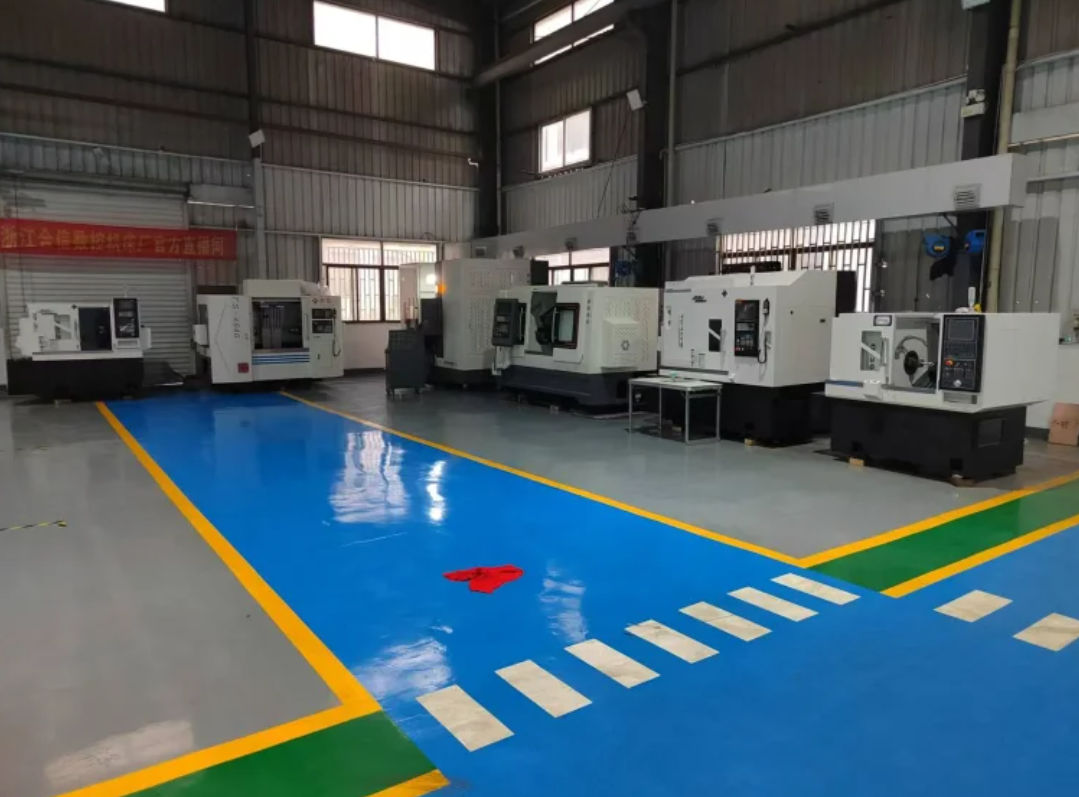
CNC machine tools are the core equipment in the field of precision mechanical processing. The spindle, as the core component of rotational motion, directly determines the processing quality of precision workpieces. In actual production, spindle vibration is a common abnormal operation phenomenon. Many practitioners wonder if the vibration will necessarily damage precision workpieces - in fact, the core of this issue lies in whether the amplitude and frequency of the vibration exceed the precision threshold required by the machine tool and the processing. Once exceeded, it will cause irreversible damage from multiple dimensions.
The generation of spindle vibration usually stems from multiple factors: the imbalance of the dynamic balance of the spindle assembly will cause periodic centrifugal vibration; wear of bearings, improper preload, or excessive installation clearance will lead to radial or axial movement of the spindle; gear meshing errors in the transmission chain, slipping of belt drives, etc., will also induce unstable rotation; sudden changes in dynamic forces during the cutting process will also trigger transient vibrations of the spindle.
For precision workpieces, the damage caused by spindle vibration has multi-dimensional significant characteristics. Firstly, the shape and position accuracy deteriorates: precision cylindrical workpieces (such as bearing inner rings, precision shaft sleeves) usually require micrometer-level roundness and cylindricity. The radial vibration of the spindle will cause the cutting radius of the tool to change periodically, directly resulting in the processing section having elliptical or polygonal contours, completely deviating from the design requirements. Secondly, the surface quality is damaged: if the spindle is rotating at high speed and there is high-frequency and small-amplitude vibration, the instantaneous feed rate of the cutting edge will fluctuate, leaving periodic ripples on the workpiece surface, significantly increasing the surface roughness value - for mirror surface processing, aerospace precision components, etc., the ripples will reduce the wear, corrosion resistance of the parts, and even affect the functionality. Furthermore, the dimensional accuracy is out of control: for precision parts in batch processing, the dimensional deviation should be controlled within ±0.001mm. Low-frequency and large-amplitude vibrations of the spindle in the axial or radial direction will cause fluctuations in the cutting depth for each pass, resulting in severe deviations in the consistency of dimensions for the same batch of parts, and even direct scrapping of individual pieces. More seriously, spindle vibration will exacerbate the abnormal load on the cutting tool, causing the tool to break or fracture. The broken hard alloy or diamond chips will leave irreversible scratches on the workpiece surface, especially for micro-precision parts (such as electronic connector pins), even a small scratch can lead to functional failure.
The degree of damage is not only related to multiple factors: the greater the amplitude and frequency of the vibration, the more significant the damage to the workpiece; if the cutting speed resonates with the spindle vibration frequency, the damage will be further amplified; the characteristics of the workpiece also have an impact - extremely low-stiffness thin-walled precision parts will cause the workpiece to vibrate itself due to weak vibration, exacerbating the processing error; brittle materials (such as ceramics, hard alloys) are more sensitive to vibration, a slight vibration can cause the part to crack.
It should be clearly stated that not all spindle vibrations will damage precision workpieces: the factory accuracy standard of the machine tool spindle (such as radial runout ≤ 0.002mm, axial runout ≤ 0.001mm) is the basis for processing precision parts. As long as the vibration is within the allowable error range of the equipment, it will not cause obvious damage to the workpiece. However, in high-speed precision processing scenarios, once the spindle vibration exceeds the precision threshold, it will inevitably become one of the core causes for the scrapping of precision workpieces. Therefore, before precision processing, it is necessary to control the spindle vibration within the processing requirements through dynamic balance correction, bearing preload adjustment, and elimination of transmission clearance to ensure the quality of precision workpieces.
CNC machine tool production workshopCNC https://www.hexincnclathe.com/hexin-cnc-machine-tool-production-workshop.html