When selecting custom aluminum sliding doors for a residential or commercial project, it is easy to focus on the appearance and purchase price. However, these are only two parts of the decision.
For architects, contractors, property developers, distributors, and building-material importers, a good sliding door needs to meet several requirements at the same time. Structural strength, thermal insulation, glass selection, hardware, sealing, drainage, and customization all affect how the finished door performs.
A sliding door should therefore be considered as a complete system rather than simply an aluminum frame with glass.
1. Check the Aluminum Profile First
The aluminum profile forms the main structure of a sliding door, so its specifications should be one of the first things buyers review.
Important factors include the aluminum alloy, profile wall thickness, frame width, sash structure, and the size of the opening where the door will be installed.
The 105 Series Thermal Break Sliding Door from PINZAO Doors & Windows is manufactured using 6063-T5 aluminum alloy. The available profile wall thicknesses include 1.4 mm, 2.0 mm, 2.5 mm, and 3.0 mm. The system also offers 106 mm and 160 mm frame widths, with a 65 mm sash profile.
For large doors, however, thicker aluminum does not automatically mean better performance. Buyers should also consider the size and weight of the glass, sash dimensions, hardware capacity, installation conditions, and the overall door structure.
2. Thermal Break Design Should Not Be Ignored
Because aluminum transfers heat relatively easily, thermal insulation is an important consideration for exterior doors.
A thermal-break system separates the inner and outer aluminum sections with an insulating material. This helps reduce direct heat transfer through the frame and can contribute to better indoor temperature control.
The PINZAO 105 Series uses PA66 nylon thermal-break strips between the aluminum sections. Under the specified system configuration, the manufacturer lists a Uw value of ≤2.0 W/㎡·K.
When comparing different doors, buyers should look at the thermal performance of the complete door system rather than judging insulation based only on the aluminum profile.
3. Glass Configuration Can Change the Door's Performance
Glass is another major part of a sliding door. It affects not only appearance but also insulation, sound control, safety, and the total weight of each sliding panel.
The standard glass configuration of the 105 Series is 5mm+15A+5mm double hollow tempered glass. Depending on the project requirements, buyers can also choose options such as Low-E insulated glass, laminated safety glass, and built-in blinds glass.
The system provides a 29 mm glass groove opening, allowing it to accommodate different multi-layer glass configurations.
The right glass should be selected according to the building location, climate, safety requirements, acoustic expectations, and overall architectural design. A reliable manufacturer should be able to discuss these factors with the buyer instead of simply offering a fixed glass package.
4. Sliding Hardware Has a Direct Impact on Daily Use
A sliding door may look excellent when newly installed, but the quality of its hardware determines how it performs after repeated use.
Rollers, tracks, handles, locks, anti-sway components, and other small parts all contribute to the smoothness and stability of the door.
The 105 Series uses Shimik silent sliding rollers, multi-lock handles, and anti-sway stoppers. It also features a low barrier-free flat track combined with a hidden drainage structure.
For B2B buyers, spare parts should also be considered. When supplying doors for multiple buildings or projects, having access to replacement rollers, handles, seals, and other components can make future maintenance much easier.
5. Sealing and Drainage Are Important for Exterior Doors
A sliding door is part of the building envelope, so protection against air and water should receive the same attention as the frame and glass.
The PINZAO 105 Series uses full-surround EPDM weather-resistant sealing strips and an embedded drainage structure. According to the listed configuration, its performance includes:
- Wind resistance: Level 8
- Water tightness: Level 6
- Air tightness: Level 5
- Sound insulation: ≥32 dB
- Uw value: ≤2.0 W/㎡·K
These figures should always be reviewed together with the applicable testing methods, standards, and exact product configuration before being used as project specifications.
6. Customization Should Go Beyond Color
For project buyers, customization does not simply mean choosing a different frame color.
A capable custom aluminum sliding door manufacturer should be able to provide options that match different building layouts and user requirements.
The 105 Series supports:
- Two-track and three-track sliding
- Single or double sliding configurations
- Custom colors
- Security screens
- Fingerprint smart locks
- Anti-collision buffers
- Different glass configurations
This flexibility allows the same basic door system to be adapted for different applications rather than forcing every project to use an identical configuration.
7. Where Can the 105 Series Be Used?
The application of a sliding door depends on its configuration, size, glass, hardware, and installation environment.
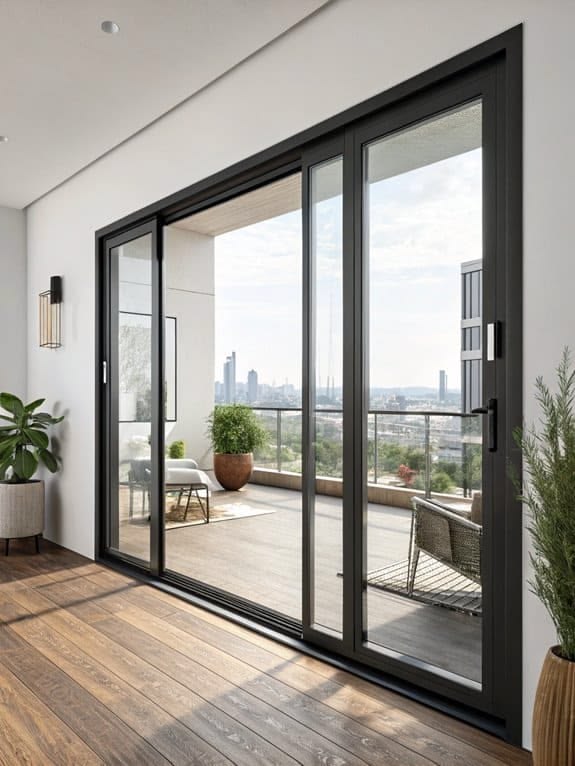
The PINZAO 105 Series can be used in a variety of residential and commercial spaces, including:
- Residential balconies
- Villas
- Living rooms
- Shops
- Offices
- Hotels
For large openings or areas with frequent traffic, buyers should pay particular attention to the track system, roller capacity, glass weight, opening size, and installation requirements.
What Should Buyers Look for in a Custom Aluminum Sliding Door Supplier?
Choosing the right manufacturer can be just as important as choosing the door itself.
Before placing an order, B2B buyers should consider several areas:
Profile capability: Check the available aluminum grades, wall thicknesses, frame sizes, and profile configurations.
Glass selection: Make sure the supplier can provide suitable tempered, laminated, insulated, Low-E, or other glass combinations required for the project.
Hardware quality: Review the rollers, tracks, locks, handles, seals, and availability of replacement parts.
Customization: Confirm whether the supplier can support different dimensions, colors, track arrangements, opening methods, and accessories.
Technical support: For larger projects, the supplier should be able to review drawings and recommend suitable configurations.
Production consistency: If the project involves repeat orders, consistent dimensions, colors, profiles, glass, and hardware are essential.
These factors can have a greater effect on long-term project performance than simply comparing the initial purchase price.
Why Choose PINZAO Doors & Windows?
For buyers looking for custom aluminum sliding doors, PINZAO Doors & Windows provides the 105 Series Thermal Break Sliding Door, combining aluminum profiles, PA66 thermal breaks, multiple glass choices, sliding hardware, EPDM sealing, drainage, and flexible opening configurations.
The product is designed to provide different options for residential and commercial applications while allowing buyers to customize important parts of the system according to project requirements.
For distributors, contractors, developers, and building-material importers, working with a manufacturer that can provide both product customization and consistent production can make the purchasing process more efficient.
Final Thoughts
Buying a sliding door should involve more than comparing prices, colors, or exterior appearance. The aluminum profile, thermal break, glass, hardware, sealing system, drainage structure, and customization options all work together to determine the final performance.
For projects requiring custom aluminum sliding doors, it is therefore better to evaluate the complete door system and the manufacturer's production capabilities before making a decision.
The PINZAO 105 Series Thermal Break Sliding Door provides multiple profile, glass, hardware, track, and customization options, making it suitable for different residential and commercial applications. A careful comparison of these details can help buyers choose a sliding door that fits both the project's design requirements and its long-term use.
https://www.pinzaodw.com/custom-aluminum-sliding-doors-how-to-choose-a-reliable-supplier.html