
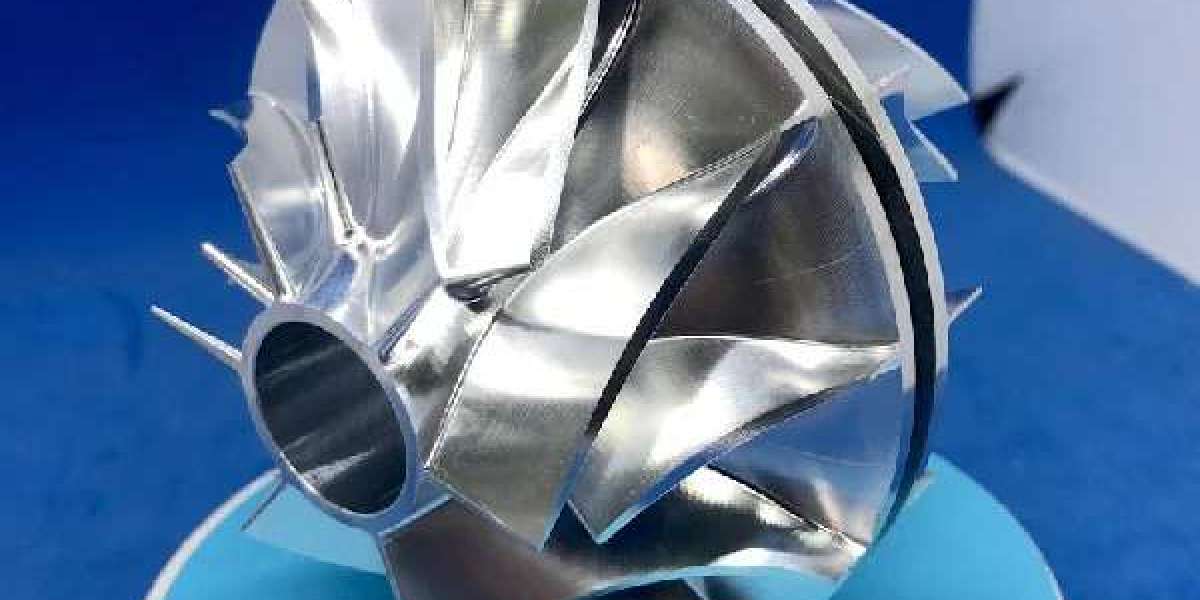
The aerospace industry has always pushed manufacturing technology to its limits. Modern aircraft and aerospace systems require components that are not only lightweight and durable, but also extremely precise. As engineering standards continue to rise, traditional machining methods are becoming less efficient for producing the complex geometries now common in aerospace applications.
This is one reason why custom 5-axis machining for aerospace parts has become increasingly important across the industry.
Compared with conventional CNC machining, 5-axis machining allows manufacturers to process highly complex components with better precision, fewer setups, and improved production efficiency. For aerospace companies dealing with tight tolerances and difficult materials, these advantages are becoming difficult to ignore.
At AICHI TECHNOLOGY, we have seen growing demand for advanced multi-axis machining solutions capable of meeting the evolving requirements of aerospace manufacturing.
What Makes 5-Axis Machining Different?
Traditional 3-axis CNC machines move along the X, Y, and Z directions. While suitable for many standard machining operations, they often struggle with complex aerospace geometries that require multiple angles and intricate surface machining.
A 5-axis CNC system adds two additional rotational axes, allowing the cutting tool or workpiece to move simultaneously from multiple directions.
This capability provides several important advantages:
- Improved machining flexibility
- Reduced repositioning
- Better dimensional accuracy
- More efficient material removal
- Enhanced surface finish quality
For aerospace components with curved profiles, deep cavities, or compound angles, 5-axis machining significantly simplifies the manufacturing process.
Aerospace Components Are Becoming More Complex
Modern aerospace engineering focuses heavily on:
- Weight reduction
- Structural optimization
- Fuel efficiency
- Thermal performance
- Mechanical reliability
As a result, many aerospace parts now feature:
- Thin-wall structures
- Organic geometries
- Internal cooling channels
- Multi-surface contours
- Tight tolerance requirements
These designs are difficult to machine efficiently using conventional methods.
In many cases, traditional machining would require:
- Multiple setups
- Additional fixtures
- Repeated alignment adjustments
Each additional setup increases the risk of:
- Positioning errors
- Tolerance variation
- Surface inconsistency
- Longer production cycles
Custom 5-axis machining reduces these issues by allowing more operations to be completed in a single setup.
Precision Is Critical in Aerospace Manufacturing
Few industries demand the level of precision required in aerospace machining.
Even extremely small dimensional deviations can affect:
- Aerodynamic performance
- Structural stability
- Assembly accuracy
- Thermal efficiency
- Operational safety
This is why aerospace machining focuses heavily on:
- Tight tolerances
- Stable process control
- Surface quality
- Material consistency
5-axis machining improves cutting stability because the tool can maintain more optimal contact angles during machining. This helps reduce vibration, tool deflection, and surface irregularities.
The result is:
- Better dimensional accuracy
- Improved repeatability
- Higher-quality finished surfaces
which are essential for aerospace-grade components.
Reduced Setup Time Improves Manufacturing Efficiency
One major advantage of custom 5-axis machining is production efficiency.
Traditional machining often requires operators to repeatedly reposition parts to access different surfaces. This process increases:
- Labor time
- Fixture complexity
- Inspection requirements
- Production cost
With 5-axis machining, many complex features can be processed during a single operation.
Benefits include:
- Faster production cycles
- Lower setup time
- Reduced human error
- Better machining consistency
For aerospace projects involving prototype development or low-volume precision production, these efficiencies are especially valuable.
Material Challenges in Aerospace Machining
Aerospace components frequently use difficult-to-machine materials such as:
- Titanium alloys
- Inconel
- Stainless steel
- High-strength aluminum
- Composite materials
These materials are selected for their:
- Strength-to-weight ratio
- Heat resistance
- Corrosion resistance
- Structural performance
However, they also create machining challenges including:
- High cutting temperatures
- Tool wear
- Material deformation
- Surface hardening
Advanced 5-axis machining strategies help optimize cutting angles and tool paths, improving machining stability when processing demanding aerospace materials.
Real-World Aerospace Applications
Custom 5-axis machining is now widely used across multiple aerospace applications.
Common examples include:
- Turbine blades
- Engine housings
- Structural brackets
- Flight control components
- Aerospace connectors
- Precision mounting systems
- Lightweight support structures
Many of these parts require highly complex geometries combined with strict dimensional tolerances.
For example, turbine blades often include intricate cooling channels and aerodynamic profiles that are extremely difficult to manufacture using traditional machining methods.
At AICHI TECHNOLOGY, advanced machining processes are developed to support complex aerospace component manufacturing while maintaining stable production quality and dimensional accuracy.
Surface Quality and Aerodynamic Performance
In aerospace manufacturing, surface quality directly affects performance.
Poor surface finishes may influence:
- Airflow behavior
- Friction characteristics
- Heat transfer efficiency
- Fatigue resistance
5-axis machining improves surface consistency because the cutting tool can remain properly aligned with complex curved surfaces throughout the machining process.
This reduces:
- Tool marks
- Surface irregularities
- Secondary finishing requirements
while improving overall component quality.
Quality Control Remains a Core Requirement
Advanced machining capability alone is not enough for aerospace production.
Inspection and process verification remain essential.
Aerospace manufacturers typically combine CNC machining with:
- Coordinate measuring machines (CMM)
- Optical inspection systems
- Surface roughness testing
- Precision dimensional verification
to ensure components meet strict engineering standards.
At AICHI TECHNOLOGY, machining consistency and inspection reliability are both considered critical parts of precision manufacturing workflow management.
The Future of Aerospace Machining
As aerospace systems continue becoming lighter, more efficient, and more complex, machining technology will continue evolving alongside them.
Industry trends increasingly focus on:
- Advanced lightweight structures
- Integrated component designs
- Higher machining precision
- Reduced assembly complexity
- Faster development cycles
Custom 5-axis machining is expected to remain one of the key technologies supporting these advancements.
At the same time, integration with:
- CAD/CAM automation
- Digital simulation
- Smart manufacturing systems
- Hybrid machining technologies
will continue improving manufacturing flexibility and production efficiency.
Conclusion
Custom 5-axis machining for aerospace parts is no longer limited to specialized applications. It has become a core manufacturing solution for producing high-precision aerospace components efficiently and reliably.
By enabling:
- Complex geometry machining
- Reduced setup operations
- Improved surface quality
- Better dimensional control
- Enhanced production efficiency
5-axis machining helps aerospace manufacturers meet the increasing demands of modern engineering.
At AICHI TECHNOLOGY, we continue focusing on advanced precision machining solutions designed to support the evolving requirements of aerospace manufacturing and customized industrial component production.
In today’s aerospace industry, machining precision is not simply a manufacturing target—it is part of overall system reliability and performance.