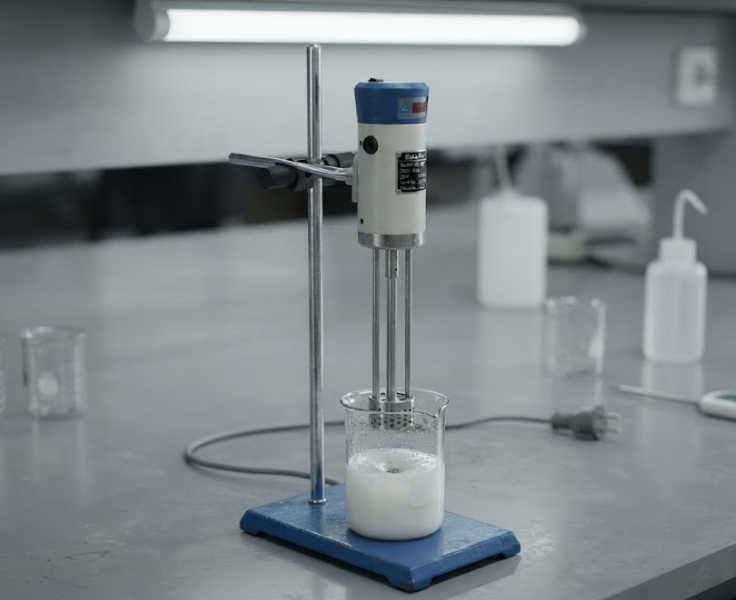
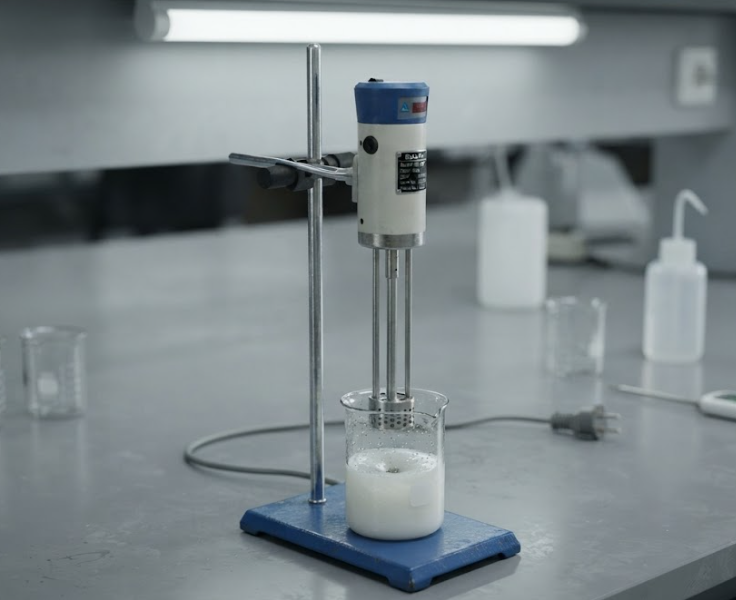
Mixing and homogenization have a direct impact on the quality of many industrial products. Pharmaceutical formulations, specialty chemicals, polymers, food emulsions, and other products all require materials to be combined evenly and remain stable during production.
Using unsuitable equipment can lead to problems such as uneven mixing, phase separation, unstable product quality, and higher production costs. This makes equipment selection an important step for facility managers and process engineers.
When choosing a high shear homogenizer machine, buyers need to consider more than the machine's speed or motor power. Product viscosity, particle size, required dispersion, hygiene requirements, production volume, and maintenance conditions should all be taken into account.
Rucca provides high shear homogenizing and mixing equipment for pharmaceutical, chemical, food, and other industrial applications, with configurations that can be adapted to different processing requirements.
Different Industries Have Different Mixing Requirements
There is no single homogenizer configuration that is ideal for every production process.
A pharmaceutical formulation may require strict hygienic conditions, while a chemical process may place greater demands on corrosion and wear resistance. Food manufacturers, meanwhile, may be more concerned with texture, stability, and consistent batch quality.
Understanding these differences is the first step toward selecting suitable equipment.
1. Pharmaceutical and Biomedical Applications
Pharmaceutical production requires a high level of control over contamination, particle size, and batch consistency.
Products such as lipid emulsions, ophthalmic suspensions, creams, and other formulations may require very fine and uniform dispersion. The equipment also needs to meet appropriate hygienic requirements and be easy to clean.
A pharmaceutical-grade Rucca high shear homogenizer can be manufactured using electro-polished 316L stainless steel, with surface roughness as low as Ra ≤ 0.4 μm. Sanitary tri-clamp connections can simplify cleaning and equipment connection.
Depending on the process, CIP and SIP functions can also be incorporated. Double-acting mechanical seals help reduce the possibility of contamination from the outside environment or lubricating materials.
For pharmaceutical facilities, equipment selection should therefore consider not only homogenizing performance but also cleaning, sterilization, material compatibility, and process control.
2. Chemical and Polymer Processing
Chemical production often involves conditions that are more demanding from a mechanical perspective.
Solvents, acids, abrasive powders, fillers, pigments, and high-viscosity materials can all place additional stress on the mixing equipment. In these applications, the rotor-stator assembly needs to withstand continuous mechanical wear while maintaining stable processing performance.
Rucca industrial homogenizer systems can use hardened materials such as tungsten carbide or Stellite-faced components for demanding applications. These materials can provide improved resistance to wear when processing abrasive products.
Temperature control is another consideration. Some chemical and polymer processes generate heat during mixing or chemical reactions. Cooling jackets can be incorporated into the equipment to help manage process temperature and protect heat-sensitive materials.
For chemical manufacturers, the right high shear homogenizer machine should therefore be selected according to the material's viscosity, abrasiveness, chemical properties, and temperature requirements.
3. Food, Beverage, and Dairy Production
In food processing, the final texture and stability of a product are often just as important as its appearance.
Products such as dairy formulations, sauces, dressings, beverages, and hydrocolloid-based products may require efficient emulsification and dispersion.
A suitable high shear mixing machine can help break down agglomerates, disperse powders, hydrate gums, and create a more uniform mixture.
Rucca's food-grade homogenizing equipment can be configured for applications where consistent texture and batch-to-batch performance are important. Proper equipment selection can help manufacturers reduce uneven particles and improve the stability of emulsified products.
Food processing also requires attention to cleanability and material selection, particularly when equipment is used for frequent product changes.
What Should You Check Before Buying a High Shear Homogenizer?
Once the application has been defined, several equipment characteristics should be evaluated.
Rotor-Stator Design
The rotor and stator are among the most important components in a high shear homogenizer. Their geometry, clearance, and operating speed determine how much shear is applied to the product.
Different workhead designs can produce different mixing results. Fine configurations may be appropriate for emulsification and particle reduction, while larger openings may be more suitable for pre-mixing or processing materials with larger particles.
Therefore, the workhead should be selected according to the actual product rather than simply choosing the highest-speed option.
Viscosity
Product viscosity can have a major effect on homogenizer performance.
Low-viscosity liquids are generally easier to circulate through the high-shear area, while highly viscous materials may require additional circulation or scraping systems.
For applications involving higher-viscosity products, a Rucca high shear homogenizer machine can be configured with equipment such as inline booster pumps or additional agitation systems to help maintain material movement.
The goal is to make sure that enough material continuously reaches the high-shear zone for effective processing.
Batch or Inline Operation
Another important decision is whether to use a batch or inline configuration.
Batch homogenizers are suitable for production processes where materials are loaded into a vessel and processed for a defined period.
Inline systems, on the other hand, can be installed directly into a production pipeline. Material passes through the homogenizer continuously, which can be useful for large-volume production and closed-loop processing.
An inline high shear homogenizer can also reduce the number of material transfer steps, which may help simplify production and lower contamination risks.
How to Get Better Results After Installation
Buying the right equipment is only part of the process. Operating conditions also influence the final result.
Test the Product Before Full-Scale Production
Pilot testing is recommended before moving directly to large-scale production. Representative materials can be used to determine suitable rotor speed, processing time, circulation rate, and other parameters.
This allows engineers to identify potential problems before the equipment is committed to continuous production.
Keep an Eye on Temperature
High-speed mixing can generate heat. This may not be a problem for every product, but it can affect temperature-sensitive pharmaceutical, biological, food, or chemical formulations.
Installing temperature monitoring and, where necessary, a cooling system can help maintain the desired processing conditions.
Follow a Regular Maintenance Schedule
The rotor-stator assembly and mechanical seals are exposed to continuous operation and should be inspected regularly.
Checking component wear, rotor-stator clearance, sealing performance, and cooling-water conditions can help identify problems before they cause an unexpected shutdown.
Regular maintenance can also help maintain consistent homogenization performance over the equipment's service life.
Why Supplier Experience Matters
A homogenizer is not always an off-the-shelf product. Two materials may require completely different equipment configurations even if they are processed in the same industry.
An experienced supplier should be able to discuss the material characteristics, production capacity, viscosity, desired particle size, processing method, and cleaning requirements before recommending a machine.
Rucca provides high shear homogenizing equipment for different industrial applications and can develop configurations according to the customer's process requirements.
For B2B buyers, this type of technical support can be especially useful when installing new equipment or upgrading an existing production line.
Final Thoughts
Choosing a high shear homogenizer machine should start with the product and production process rather than the machine specification alone.
Pharmaceutical manufacturers may prioritize hygienic construction and cleanability. Chemical and polymer producers may need greater wear and corrosion resistance. Food manufacturers may focus on emulsification, texture, stability, and easy cleaning.
Rotor-stator design, viscosity handling, batch or inline configuration, temperature control, and maintenance requirements should all be considered before making the final decision.
With different material options, workhead configurations, cooling solutions, and installation methods available, a properly selected Rucca high shear homogenizer can help manufacturers achieve more consistent mixing and homogenization results.
For pharmaceutical, chemical, food, and other processing applications, the right equipment is ultimately the one that matches the material, production volume, and required product quality while remaining reliable and practical to operate over the long term.
https://www.ruccagroup.net/choosing-the-right-high-shear-homogenizer-machine.html